AI job matching revolutionizes how people find careers by using intelligent algorithms to analyze your skills, experience, and preferences, then connecting you with opportunities that truly fit. This technology streamlines the hiring process for both job seekers and employers, making it faster, more accurate, and less biased than traditional methods.
Gone are the days of sending hundreds of resumes into the void. AI job matching platforms scan through thousands of opportunities in seconds, identifying roles that align with your unique profile. Whether you're a recent graduate, a seasoned professional looking for a change, or someone re-entering the workforce, understanding how AI job matching works can transform your career search from exhausting to exciting.
What Is AI Job Matching?
AI job matching is technology that uses artificial intelligence to connect job seekers with employment opportunities that match their skills, experience, and career goals. Instead of manually scrolling through endless job boards, AI does the heavy lifting by analyzing your profile and suggesting positions where you're likely to succeed.
These systems work by processing massive amounts of data from resumes, job descriptions, and candidate preferences. The technology looks beyond basic keyword matching to understand context, transferable skills, and even cultural fit between candidates and companies.
Modern AI matching platforms consider factors like:
- Technical and soft skills
- Work experience and education
- Location preferences and remote work options
- Salary expectations
- Company culture and values
- Career advancement opportunities
The goal is creating meaningful connections that benefit both job seekers and employers. Rather than replacing human judgment, AI augments the hiring process by handling time-consuming screening tasks, allowing recruiters to focus on building relationships with top candidates.
How Does AI Job Matching Work?
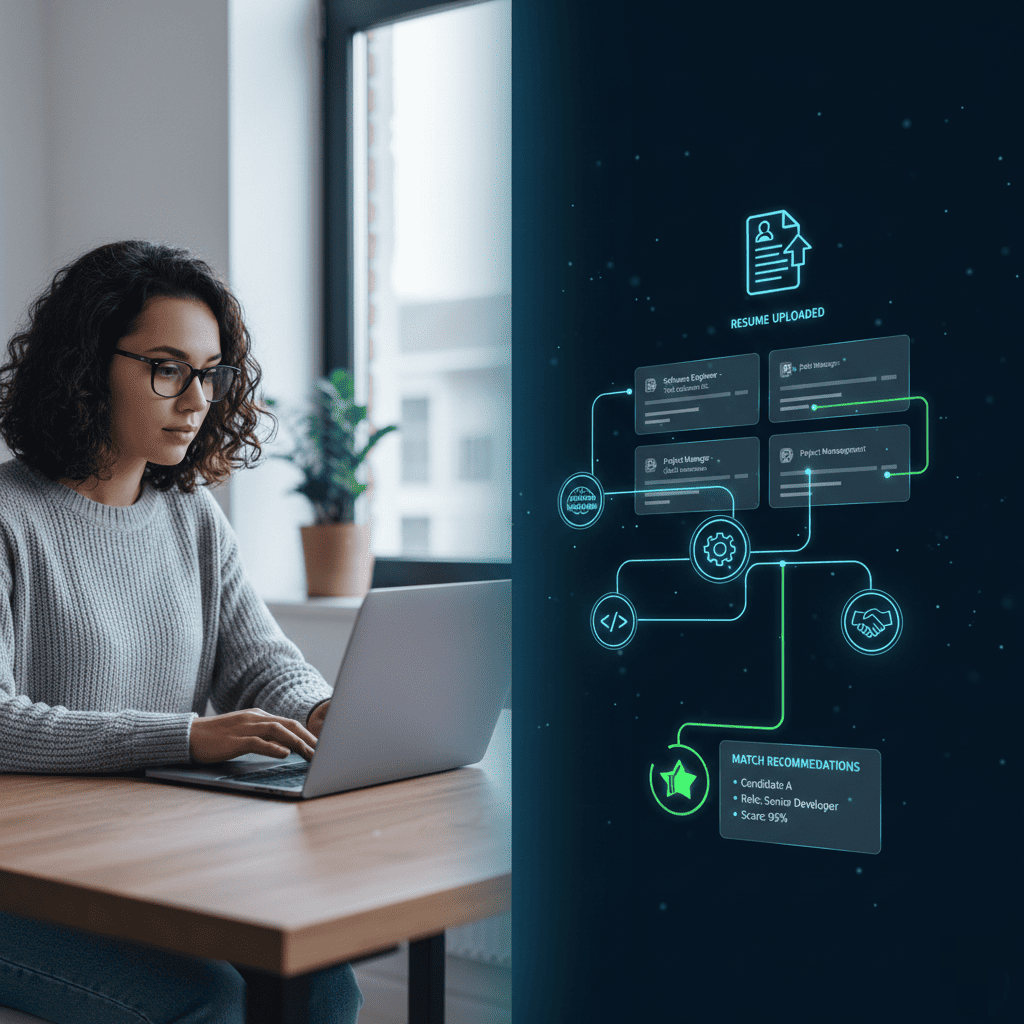
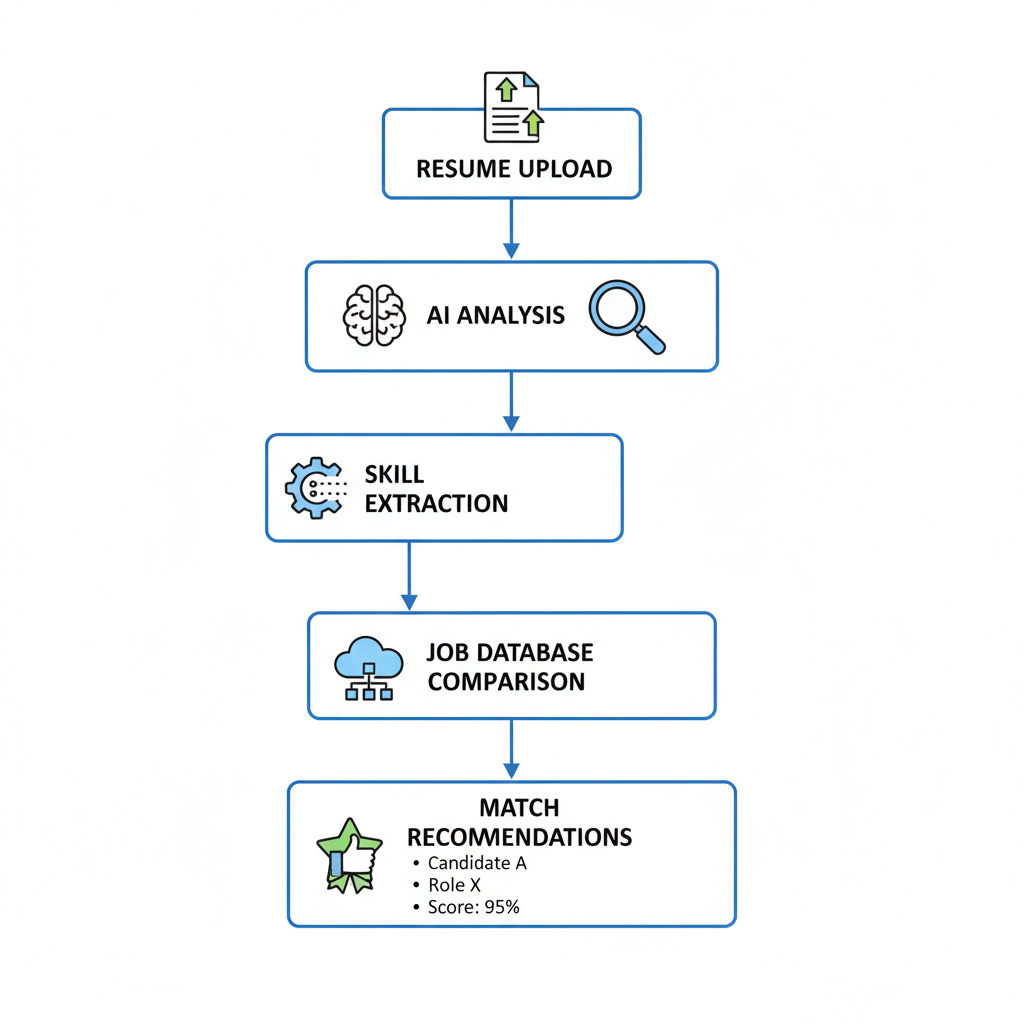
AI job matching operates through sophisticated algorithms that learn and improve over time. The process begins when you create a profile on a platform, uploading your resume and inputting information about your skills, experience, and career preferences.
The Matching Process Explained
The AI system breaks down your information into data points it can analyze. Natural language processing (NLP) reads your resume, extracting relevant details about your work history, education, and skills. Machine learning algorithms then compare these details against thousands of job postings.
What makes AI matching powerful is its ability to recognize patterns humans might miss. For example, if you have experience in customer service and problem-solving skills, the AI might suggest roles in technical support or client success management—positions you might not have considered but where your skills would shine.
The technology also learns from outcomes. When candidates accept certain roles and succeed in them, the system notes which factors led to that success. Over time, this feedback loop makes the AI's recommendations increasingly accurate.
 Advanced Features That Set AI Apart
Modern AI job matching platforms include features that go beyond simple resume scanning. Predictive analytics forecast which candidates are likely to stay long-term in specific roles. Sentiment analysis evaluates how well a candidate's communication style might fit with a company's culture.
Some platforms even use video interview analysis, where AI examines not just what candidates say but how they say it. While this raises privacy concerns for some users, proponents argue it provides a more complete picture of candidate suitability.
At career fairs and networking events, companies now use AI photo booth technology to create engaging candidate experiences while simultaneously collecting profile information. These interactive stations make the application process memorable and efficient.
Why AI Job Matching Matters for Job Seekers
For people searching for work, AI job matching offers advantages that traditional methods can't match. The technology saves countless hours by automatically surfacing relevant opportunities rather than requiring manual searches through multiple job boards.
Personalized Recommendations
AI matching platforms learn your preferences over time. The more you interact with the system—viewing certain jobs, saving listings, or indicating which opportunities don't interest you—the smarter it becomes about what you're seeking. This personalization means you see fewer irrelevant postings and more positions that genuinely fit your goals.
Discovering Hidden Opportunities
Many job seekers limit their searches to specific titles or industries they're familiar with. AI expands your horizons by identifying transferable skills and suggesting roles in adjacent fields. A marketing coordinator with strong writing skills might discover opportunities in content strategy, for instance, opening doors they hadn't considered.
Reducing Bias in Initial Screening
When implemented thoughtfully, AI can reduce some forms of unconscious bias in hiring. The technology focuses on skills and qualifications rather than factors like name, age, or where someone went to school. However, it's important to note that AI systems can perpetuate existing biases if trained on historical data that contains those biases.
How Employers Benefit from AI Job Matching
Companies face their own challenges in hiring, from processing thousands of applications to finding candidates who'll thrive in their specific environment. AI job matching addresses these pain points effectively.
Efficiency and Time Savings
Recruiters often spend hours screening resumes for basic qualifications. AI handles this initial filtering instantly, allowing HR teams to focus their energy on interviewing and evaluating top candidates. This efficiency is particularly valuable for high-volume hiring or specialized roles that attract many applicants.
Better Quality of Hire
By analyzing which candidate characteristics correlate with success in specific roles, AI helps companies make more informed hiring decisions. The technology can identify patterns in successful employees' backgrounds and use those insights to screen future applicants.
Improved Candidate Experience
Nobody likes applying for jobs and hearing nothing back. AI matching systems can automatically notify candidates about their application status and suggest alternative positions if they're not selected. This responsiveness improves employer brand and keeps talented individuals engaged with the company.
Companies hosting recruitment events often enhance the experience with 360 photo booth setups, creating shareable moments that increase event visibility while collecting valuable candidate information through integrated sign-up systems.
Popular AI Job Matching Platforms and Tools
The market offers numerous AI-powered job matching solutions, each with unique features and target audiences. Understanding your options helps you choose platforms that align with your needs.
| Platform Type | Best For | Key Features |
| General Job Boards | Wide range of industries and roles | Large candidate pools, diverse opportunities, comprehensive filters |
| Industry-Specific Platforms | Specialized fields like tech or healthcare | Deep industry knowledge, relevant skill assessments, targeted networking |
| Career Assessment Tools | People exploring career changes | Personality tests, skill evaluations, career path suggestions |
| Company Career Pages | Candidates interested in specific employers | Direct application, company culture insights, internal mobility options |
Leading Solutions in the Market
LinkedIn's AI-powered job recommendations have become incredibly sophisticated, learning from your profile activity, connections, and job search history. The platform suggests roles based on skills listed in your profile and even those implied by your experience.
Indeed uses AI to match candidates with jobs while also helping job seekers optimize their resumes for specific positions. The platform's resume builder suggests improvements based on the types of roles you're targeting.
ZipRecruiter's matching technology works from both directions—showing candidates relevant jobs while simultaneously alerting employers to qualified applicants. This two-way matching increases the likelihood of successful connections.
Specialized platforms like Hired focus on tech roles, using AI to facilitate conversations between candidates and companies. These platforms often include salary information upfront, making the process more transparent.
Things To Know About AI Job Matching
Understanding the realities of AI job matching helps you use these tools effectively while maintaining realistic expectations. Here are essential considerations that every job seeker and employer should keep in mind.
Data Quality Matters Most
AI matching is only as good as the information it receives. An incomplete profile or poorly written resume will limit the system's ability to find appropriate matches. Take time to thoroughly fill out your profile, including skills you might consider obvious—the AI needs explicit information to make accurate recommendations.
Human Judgment Remains Essential
AI excels at processing large volumes of data quickly, but it can't replace human intuition about fit and potential. Use AI recommendations as a starting point, not the final word. Research companies, network with employees, and trust your instincts about whether a role truly aligns with your goals.
Privacy and Data Security
When using AI job matching platforms, you're sharing sensitive personal information. Read privacy policies carefully to understand how your data will be used, stored, and shared. Reputable platforms should clearly explain their data practices and give you control over your information.
Algorithm Transparency Varies
Some platforms openly explain how their matching algorithms work, while others keep their methods proprietary. When possible, choose platforms that provide insight into their matching criteria so you understand why certain jobs are recommended.
Continuous Learning and Updates
AI matching systems improve through feedback. When you mark jobs as interesting or not relevant, you're training the algorithm to serve you better. Engage actively with platforms rather than passively receiving recommendations.
Companies leveraging AI at recruitment events often combine technology with engaging experiences like AI Matching setups, creating memorable interactions that help candidates feel valued while the AI works behind the scenes to process their information efficiently.
Maximizing Your Success with AI Job Matching
Getting the most from AI job matching requires strategic use of these platforms. Simply creating a profile isn't enough—you need to optimize how you present yourself to the algorithms.
Optimize Your Digital Profile
Think of your profile as a conversation with AI. Use clear, specific language about your skills and experience. Instead of saying you have "good communication skills," describe concrete examples: "presented quarterly results to executives" or "trained 15 new team members on customer service protocols."
Include relevant keywords from job descriptions in your field, but avoid keyword stuffing. The AI is sophisticated enough to recognize when you're genuinely qualified versus trying to game the system.
Stay Active and Engaged
Regular platform activity signals to AI that you're an active job seeker. Log in frequently, update your profile when you acquire new skills, and interact with job postings. This engagement helps keep your profile visible to employers and improves the accuracy of recommendations you receive.
Complement AI with Traditional Methods
AI job matching is powerful but shouldn't be your only job search strategy. Continue networking, attending industry events, and directly reaching out to companies that interest you. The most effective job searches combine AI efficiency with human relationship-building.
Many successful candidates share how they found opportunities through connections made at networking events featuring interactive experiences like those provided by best job seekers matching, where memorable interactions led to meaningful professional relationships. Be Honest About Your Qualifications
While it's tempting to exaggerate skills or experience to match more jobs, this approach backfires. AI systems are increasingly sophisticated at detecting inconsistencies, and even if you get past initial screening, dishonesty will surface during interviews or on the job.
Present yourself authentically, highlighting genuine strengths and being upfront about areas where you're still developing. Employers value candidates who know themselves and are committed to growth.
The Future of AI Job Matching
AI job matching technology continues to evolve rapidly, with new capabilities emerging that will further transform how people find work and companies find talent.
Emerging Trends and Innovations
Voice-activated job search is becoming more prevalent, allowing candidates to search for opportunities hands-free using smart assistants. This accessibility improvement helps job seekers with disabilities and those who prefer auditory interaction.
Virtual reality integration lets candidates experience workplace environments before applying, giving them better insight into whether a role suits them. Companies create VR office tours that help remote candidates understand company culture.
Blockchain verification is starting to appear in hiring, allowing candidates to create immutable records of their credentials and work history. This technology reduces fraud while streamlining background checks.
| Innovation | Impact on Job Seekers | Impact on Employers |
| Predictive Success Modeling | Receive recommendations for roles where you're likely to excel long-term | Reduce turnover by identifying candidates with staying power |
| Skills Gap Analysis | Get personalized learning recommendations to qualify for desired roles | Build talent pipelines by identifying candidates who are almost qualified |
| Cultural Fit Assessment | Find companies whose values align with yours | Build cohesive teams with compatible communication styles |
| Real-Time Market Intelligence | Understand which skills are in demand and adjust accordingly | Make data-driven decisions about compensation and benefits |
Addressing Concerns About AI in Hiring
As AI becomes more prevalent in job matching, important questions arise about fairness, transparency, and the role of human judgment. Regulators in various jurisdictions are considering legislation to ensure AI hiring tools don't discriminate or perpetuate existing inequalities.
Responsible AI development requires diverse teams building these systems, comprehensive testing for bias, and ongoing monitoring of outcomes. Job seekers and employers should advocate for ethical AI practices and choose platforms committed to fairness.
The most successful implementations of AI job matching will be those that augment human decision-making rather than attempting to replace it entirely. Technology should handle repetitive screening tasks while humans focus on evaluating potential, cultural fit, and intangible qualities that determine success.
Practical Tips for Different Career Stages
How you approach AI job matching should vary based on where you are in your career journey. Here's targeted advice for different situations.
For Recent Graduates
Emphasize education, internships, and projects rather than extensive work history. AI systems understand that entry-level candidates bring different value, so focus on demonstrating potential through coursework, volunteer work, and extracurricular activities.
Highlight transferable skills gained through college experiences. Leadership in student organizations, complex project management in group assignments, and research capabilities all translate to professional settings.
For Career Changers
Be explicit about transferable skills when moving between industries. If you're transitioning from teaching to corporate training, clearly connect your classroom management experience to team leadership and your curriculum development skills to instructional design.
Consider taking courses or earning certifications in your target field before actively job hunting. These credentials signal commitment to your new direction and give AI systems more relevant data to match you with appropriate opportunities.
For Experienced Professionals
Quantify your achievements whenever possible. Instead of "managed a team," specify "led a team of 12 through a system migration that increased efficiency by 35%." These concrete details help AI understand the scope of your experience.
Don't undersell soft skills developed over years. Strategic thinking, stakeholder management, and the ability to navigate organizational politics are valuable competencies that AI systems are learning to recognize and value.
Companies looking to attract experienced professionals often create standout experiences at recruitment events, incorporating technology like best AI Matching setups that demonstrate their commitment to innovation while making the recruitment process more engaging.

Wrapping Up Your AI Job Matching Journey
AI job matching represents a significant shift in how careers and opportunities connect, offering unprecedented efficiency and personalization in the job search process. This technology analyzes your unique combination of skills, experience, and preferences to surface opportunities you might never have found through traditional search methods.
The key to success with ai job matching lies in understanding both its capabilities and limitations. These platforms excel at processing vast amounts of data quickly, identifying patterns, and making connections that would be impossible manually. However, they work best when combined with human judgment, networking, and authentic self-presentation.
As you navigate your career journey, embrace AI job matching as a powerful tool in your arsenal. Keep your profiles updated, engage actively with platforms, and remain open to unexpected opportunities the technology surfaces. At the same time, continue building genuine professional relationships and trusting your instincts about fit.
The future of work is increasingly digital, and AI job matching will only become more sophisticated and integral to hiring processes. By understanding how these systems work and using them strategically, you position yourself to take advantage of opportunities while maintaining control over your career direction.
Whether you're taking your first steps into the professional world, seeking a career change, or climbing to new heights in your field, AI job matching can accelerate your journey to meaningful work that aligns with your skills, values, and aspirations.
Frequently Asked Questions About AI Job Matching
How does AI matching work?
AI matching analyzes your resume, skills, and preferences, then compares them against job requirements using algorithms to identify the best fits. The system uses natural language processing to understand context beyond simple keywords, considering factors like transferable skills, cultural fit, and career trajectory. Machine learning allows these platforms to improve recommendations over time based on successful placements and user feedback.
Will AI replace 50% of jobs?
Predictions vary, but most experts believe AI will transform rather than eliminate most jobs. While certain repetitive tasks will become automated, new roles will emerge that require uniquely human skills like creativity, emotional intelligence, and complex problem-solving. The key is adapting by learning skills that complement AI rather than compete with it, focusing on areas where human judgment and relationships remain essential.
Is there an AI to find a job?
Yes, numerous AI-powered platforms exist specifically for job searching, including LinkedIn, Indeed, ZipRecruiter, and specialized industry platforms. These tools use artificial intelligence to match candidates with relevant opportunities, suggest resume improvements, and even predict which roles you're likely to succeed in. Many company career pages also incorporate AI matching to connect applicants with appropriate positions within their organizations.
Do employers check if you use AI?
Some employers are developing methods to detect AI-generated application materials, though detection isn't foolproof. Many companies care more about the quality and authenticity of your application than whether you used AI tools for assistance. The best approach is using AI to enhance your materials while ensuring everything reflects your genuine experience and voice. Be prepared to discuss anything in your application during interviews.
Can jobs detect ChatGPT?
Detection tools exist but aren't perfectly accurate, and many employers focus on content quality rather than how it was created. Some systems analyze writing patterns, vocabulary choices, and structural elements that may indicate AI generation. However, if you use AI as a starting point and substantially personalize the content with specific examples from your experience, detection becomes nearly impossible—and your application will be stronger and more authentic.