Huckleberry Transcripted Document
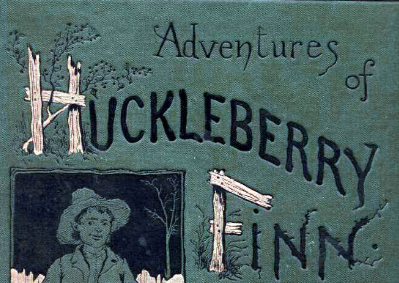
Chapter One: Huckleberry Finn
Scene: The Mississippi Valley
Time: Forty to fifty years ago
You do not know about me unless you have read a book by the name of The Adventures of Tom Sawyer, but that does not matter. That book was written by Mr. Mark Twain, and he told the truth, for the most part. There were some things which he exaggerated, but he mainly told the truth. That is nothing, though; I have never seen anybody who did not lie at one time or another, except perhaps Aunt Polly, the widow, or maybe Mary. Aunt Polly—who is Tom’s Aunt Polly—Mary, and the Widow Douglas are all mentioned in that book, which is mostly a true story, with some exaggerations, as I said before.
The way that the book ends is this: Tom and I found the money that the robbers hid in the cave, and it made us rich. We received six thousand dollars apiece—all in gold. It was an overwhelming amount of money when it was piled up. Well, Judge Thatcher took it and put—
1
H U C K L E B E R R Y F I N N
—it out at interest, and it yielded us a dollar a day apiece all year round—more than a person could figure out what to do with. The Widow Douglas took me as her son and declared that she would civilize me, but it was rough living in the house all the time, considering how dismal, regular, and decent the widow was in all her ways. So, when I could not stand it any longer, I left. I got into my old rags and my sugar-hogshead barrel again, and I was free and satisfied. But Tom Sawyer tracked me down and said he was going to start a band of robbers, and I could join if I went back to the widow and was respectable. So, I went back.
The widow cried over me and called me a poor lost lamb, and she called me a lot of other names, too, though she never meant any harm by it. She put me in those new clothes again, and I could not do anything but sweat and feel completely cramped. Well, then, the old routine started again. The widow rang a bell for supper, and you had to be on time. When you got to the table, you could not start eating right away; you had to wait for the widow to bow her head and mumble a little over the food, even though there was not really anything wrong with it—that is, nothing except that everything was cooked separately. In a barrel of odds and ends, it is different; things get mixed, the juices swap around, and everything tastes better.
After supper, she brought out her book and taught me about Moses and the Bulrushes, and I was eager to find out all about him. By and by, however, she let it slip that Moses had been dead for a very long time; after that, I did not care about him anymore, because I do not care for dead people.
Pretty soon, I wanted to smoke and asked the widow to let me, but she would not. She said it was a nasty, unclean practice and that I must try not to do it anymore. That is just the way with some people. They criticize something when they know nothing about it. Here she was, worrying about Moses, who was no kin to her and of no use to anybody since he was gone, yet finding a great deal of fault with me for doing something that had some good in it. And she took snuff, too; of course, that was completely fine because she did it herself.
Her sister, Miss Watson, a fairly slim old maid with glasses on,
2
H U C K L E B E R R Y F I N N
—had just come to live with her and took a turn at me now with a spelling book. She worked me fairly hard for about an hour, and then the widow made her ease up. I could not have stood it much longer. Then, for an hour, it was deadly dull, and I was fidgety. Miss Watson would say, “Don’t put your feet up there, Huckleberry,” and, “Don’t slouch like that, Huckleberry—sit up straight;” and pretty soon she would say, “Don’t yawn and stretch like that, Huckleberry—why don’t you try to behave?” Then she told me all about hell, and I said I wished I were there. She got angry then, but I meant no harm. All I wanted was to go somewhere; all I wanted was a change—I was not particular. She said it was wicked to say what I said, and that she would not say it for the whole world; she was going to live to go to heaven. Well, I could not see any advantage in going where she was going, so I made up my mind I would not try for it. But I never said so, because it would only cause trouble and do no good.
Now that she had started, she went on and told me all about heaven. She said all a person would have to do there was to go around all day long with a harp and sing, forever and ever. So, I did not think much of it. But I never said so. I asked her if she thought Tom Sawyer would go there, and she said not by a long shot. I was glad about that, because I wanted him and me to be together.
Miss Watson kept nagging at me, and it became tiresome and lonely. By and by, they brought the enslaved servants in and had prayers, and then everybody went off to bed. I went up to my room with a candle and put it on the table. Then I sat down in a chair by the window and tried to think of something cheerful, but it was no use. I felt so lonely I almost wished I were dead. The stars were shining, and the leaves rustled in the woods so mournfully; and I heard an owl, far off, hooting about somebody dead, and a whippoorwill and a dog crying about somebody who was going to die; and the wind was trying to whisper something to me, and I could not make out what it was, so it made cold shivers run over me. Then, far out in the woods, I heard the kind of sound a ghost makes when it wants to talk about something that is on its mind and cannot make itself understood, and so cannot rest
3
H U C K L E B E R R Y F I N N
—easy in its grave, and has to wander about that way every night, grieving. I became so downhearted and scared that I wished I had some company. Pretty soon, a spider crawled up my shoulder; I flipped it off, and it landed in the candle flame. Before I could move, it was completely shrivelled up. I did not need anybody to tell me that it was a terrible omen that would bring me bad luck, so I was terrified and nearly shook right out of my clothes. I got up, turned around in my tracks three times, and crossed my heart each time; then, I tied up a little lock of my hair with a thread to keep witches away. However, I had no confidence in that. You do that when you have lost a horseshoe you found instead of nailing it up over the door, but I had never heard anyone say it was a way to ward off bad luck when you had killed a spider.
I sat down again, shaking all over, and took out my pipe for a smoke; the house was as still as death now, so the widow would not know. Well, after a long time, I heard the clock far off in the town strike twelve times: boom—boom—boom. Then everything was still again—stiller than ever. Pretty soon, I heard a twig snap down in the dark among the trees; something was moving. I sat still and listened. Right after that, I could barely hear a "meow! meow!" down there. That was great! I said, "meow! meow!" as softly as I could, extinguished the light, and scrambled out of the window onto the shed roof. Then, I slipped down to the ground and crawled in among the trees, and, sure enough, Tom Sawyer was waiting for me.
4
Chapter Two
We tiptoed along a path among the trees back toward the end of the widow’s garden, stooping down so that the branches would not scrape our heads. When we were passing by the kitchen, I tripped over a root and made a noise. We crouched down and lay still. Miss Watson’s large, enslaved servant, named Jim, was sitting in the kitchen doorway; we could see him quite clearly because there was a light behind him. He stood up and stretched his neck out for about a minute, listening. Then he said:
“Who is there?”
He listened some more; then he came tiptoeing down and stood right between us—we could have nearly touched him. Well, it felt as though several minutes passed without a single sound, with all of us standing there so close together. A spot on my ankle began to itch, but I did not dare scratch it; then my ear began to itch, and next my back, right between my shoulders. It seemed like I would die if I could not scratch. I have noticed that phenomenon plenty of times since: if you are with high society, at a funeral, or trying to go to sleep when you are not sleepy—if you are anywhere where it is inappropriate to scratch—you will suddenly itch all over in more than a thousand places.
Pretty soon, Jim said:
“Say, who are you? Where are you? Well, I'll be damned if I didn’t hear something. I know what I am going to do: I am going to sit down right here and listen until I hear it again.”
So, he sat down on the ground between Tom and me. He leaned his back against a tree and stretched his legs out until one of them—
5
H U C K L E B E R R Y F I N N
—almost touched one of mine. My nose began to itch. It itched until tears came into my eyes, but I did not dare scratch. Then it began to itch on the inside. Next, I started itching underneath. I did not know how I was going to sit still. This misery went on for as long as six or seven minutes, but it seemed much longer than that. I was itching in eleven different places now. I figured I could not stand it more than a minute longer, but I clenched my teeth hard and got ready to try. Just then, Jim began to breathe heavily; next, he began to snore—and soon after, I was comfortable again.
Tom made a sign to me—a sort of little clicking noise with his mouth—and we went creeping away on our hands and knees. When we were ten feet away, Tom whispered to me and wanted to tie Jim to the tree for fun. But I said no; he might wake up and cause a disturbance, and then they would find out I was missing. Then Tom said he did not have enough candles and that he would slip into the kitchen to get some more. I did not want him to try. I said Jim might wake up and come out. But Tom wanted to risk it, so we slid in there and got three candles, and Tom laid five cents on the table as payment. Then we got out, and I was eager to get away, but nothing would satisfy Tom except crawling on his hands and knees to where Jim was and playing a trick on him. I waited, and it seemed like a long time because everything was so still and lonely.
As soon as Tom returned, we hurried along the path around the garden fence and eventually ended up on the steep top of the hill on the other side of the house. Tom said he slipped Jim’s hat off his head and hung it on a branch right over him; Jim stirred a little, but he did not wake.
Afterwards, Jim claimed the witches had bewitched him, put him in a trance, and ridden him all over the state before setting him under the trees again and hanging his hat on a branch to show who had done it. The next time Jim told the story, he said they rode him down to New Orleans; and after that, every time he repeated it, he exaggerated it more and more, until eventually he claimed they rode him all over the world, tired him almost to death, and left his back covered in saddle sores. Jim was incredibly proud of this, and he reached a point where he would hardly notice the other servants. Other people would travel miles to hear Jim tell his story, and he was more respected than anyone else in that area.
6
H U C K L E B E R R Y F I N N
Unfamiliar people would stand with their mouths open and look him all over, just as if he were a marvel. They were always talking about witches in the dark by the kitchen fire, but whenever someone was talking and pretending to know all about such things, Jim would walk in and say, “Hm! What do you know about witches?” and that person would be silenced and have to take a back seat. Jim always kept that five-cent piece around his neck on a string and said it was a charm the devil had given to him with his own hands, telling him he could cure anybody with it and summon witches whenever he wanted to just by saying something to it—though he never revealed what it was he said to it. People would come from all around the area and give Jim anything they had just for a glimpse of that five-cent piece, but they would not touch it because the devil had laid his hands on it. Jim was almost ruined as a servant because he became stuck-up on account of having seen the devil and been ridden by witches.
Well, when Tom and I reached the edge of the hilltop, we looked all the way down into the village and could see three or four lights twinkling, where there were sick people, perhaps. The stars above us were sparkling beautifully, and down by the village was the river, a whole mile wide, terribly still and grand. We went down the hill and found Jo Harper, Ben Rogers, and two or three more of the boys hidden in the old tanyard. We unhitched a skiff, rowed two and a half miles down the river to the big clearing on the hillside, and went ashore.
We went to a clump of bushes, and Tom made everyone swear to keep the secret; then, he showed them a hole in the hill, right in the thickest part of the bushes. We lit the candles and crawled in on our hands and knees. We went about two hundred yards, and then the cave opened up. Tom poked around among the passages, and pretty soon ducked under a wall where you wouldn't have noticed there was a hole. We went through a narrow passage and entered a sort of room that was damp, clammy, and cold, and there we stopped. Tom said:
“Now, we’ll start this band of robbers and call it Tom Sawyer’s Gang. Everyone who wants to join has to take an oath and write his name in blood.”
7
H U C K L E B E R R Y F I N N
Everyone was willing. So, Tom took out a sheet of paper on which he had written the oath and read it. It bound every boy to stick to the band and never reveal any of its secrets; if anyone harmed a boy in the band, whichever member was ordered to kill that person and his family had to do it. Furthermore, he was forbidden to eat or sleep until he had killed them and hacked a cross into their chests, which was the sign of the band. No one outside the band was permitted to use that mark, and if anyone did, he would be sued; if he did it again, he would be killed. If anyone belonging to the band revealed the secrets, he would have his throat cut, his carcass burned, and the ashes scattered all around; his name would be blotted off the list with blood and never mentioned by the gang again, but would instead be cursed and forgotten forever.
Everyone said it was a truly beautiful oath and asked Tom if he had made it up himself. He said that some of it came from his own head, but the rest was taken from pirate and robber books, noting that every high-class gang used an oath like it.
Some thought it would be a good idea to kill the families of the boys who revealed the secrets. Tom agreed that it was an excellent idea, so he took a pencil and wrote it into the text. Then Ben Rogers said:
“Here’s Huck Finn; he doesn’t have a family. What are you going to do about him?”
“Well, doesn’t he have a father?” Tom Sawyer asked.
“Yes, he has a father, but you can never find him these days. He used to lie drunk with the hogs in the tanyard, but he hasn’t been seen in these parts for a year or more.”
They discussed it, and they were going to rule me out because they said every boy had to have a family or someone to kill, otherwise it would not be fair to the others. No one could think of a solution—everyone was stumped and sat in silence. I was almost ready to cry, but all at once I thought of a way, so I offered them Miss Watson—they could kill her. Everyone said:
“Oh, she will do. That’s perfectly fine. Huck can join.”
Then they all pricked their fingers with a pin to get blood to sign with, and I made my mark on the paper.
“Now,” Ben Rogers asked, “what is the line of business for this gang?”
“Nothing except robbery and murder,” Tom said.
8
H U C K L E B E R R Y F I N N
“But who are we going to rob? —houses, cattle, or—”
“Nonsense! Stealing cattle and things like that isn’t robbery; it’s burglary,” Tom Sawyer said. “We aren’t burglars. That has no style at all. We are highwaymen. We will wear masks, stop stagecoaches and carriages on the road, kill the people, and take their watches and money.”
“Must we always kill the people?”
“Oh, certainly. It’s best. Some authorities think differently, but it is mostly considered best to kill them—except for a few that you bring here to the cave and keep until they are ransomed.”
“Ransomed? What is that?”
“I don’t know. But that is what they do. I’ve seen it in books, so, of course, that is what we have to do.”
“But how can we do it if we don’t know what it is?”
“Why, damn it all, do we have to do it. Didn’t I tell you it’s in the books? Do you want to do things differently from how they are done in the books and get everything all muddled up?”
“Oh, that’s all very well to say, Tom Sawyer, but how on earth are these fellows going to be ransomed if we don’t know how to do it to them? —That is what I want to understand. Now, what do you think it means?”
“Well, I don’t know. But perhaps if we keep them until they are ransomed, it means that we keep them until they are dead.”
“Now, that makes sense. That will work. Why couldn’t you have said that before? We’ll keep them until they are ransomed to death; and a bothersome bunch they will be, too—eating up everything and always trying to get loose.”
“How you talk, Ben Rogers. How can they get loose when there is a guard over them, ready to shoot them down if they move an inch?”
“A guard! Well, that is great. So, someone has to stay up all night and never get any sleep just to watch them. I think that’s foolishness. Why can’t a person take a club and ransom them as soon as they get here?”
“Because it isn’t written that way in the books—that’s why. Now, Ben Rogers, do you want to do things properly or don’t you? —that’s the question. Don’t you think the people who wrote the books know the correct way to do things? Do you think you can teach them anything? Of course not.”
9
H U C K L E B E R R Y F I N N
—by a long shot. No, sir, we will just go on and regularly ransom them.”
“All right. I don’t mind, but I still say it’s a foolish way. Say, do we kill the women, too?”
“Well, Ben Rogers, if I were as ignorant as you, I wouldn’t let on. Kill the women? No, nobody ever read anything like that in the books. You bring them to the cave, and you are always as polite as can be to them; eventually, they fall in love with you and never want to go home anymore.”
“Well, if that’s the way it works, I agree, but I don’t buy into it. Pretty soon, we’ll have the cave so cluttered up with women and fellows waiting to be ransomed that there won’t be any room for the robbers. But go ahead, I have nothing more to say.”
Little Tommy Barnes was asleep by now, and when they woke him up, he was frightened. He cried and said he wanted to go home to his mother and didn’t want to be a robber anymore.
So, they all made fun of him and called him a crybaby. That made him angry, and he threatened to go straight away and reveal all the secrets. However, Tom gave him five cents to keep quiet and said we should all go home and meet next week to rob someone and kill some people.
Ben Rogers mentioned that he couldn’t get out much except on Sundays, so he wanted to begin next Sunday. But all the boys said it would be wicked to do it on Sunday, and that settled the matter. They agreed to get together and set a date as soon as they could; then, we elected Tom Sawyer first captain and Jo Harper second captain of the gang, and headed home.
I climbed up the shed and crept through my window just before dawn was breaking. My new clothes were all greasy and muddy, and I was dog-tired.
10
Chapter Three
Well, I got a good scolding in the morning from old Miss Watson on account of my clothes, but the widow didn't scold me. She only cleaned off the grease and mud, and looked so sorry that I thought I would try to behave for a while if I could. Then Miss Watson took me into the closet and prayed, but nothing came of it. She told me to pray every day, and that whatever I asked for, I would get. But it wasn't true. I tried it. Once I got a fishing line, but no hooks. It wasn't any good to me without hooks. I prayed for hooks three or four times, but somehow, I couldn't make it work. By and by, one day, I asked Miss Watson to pray for them for me, but she called me a fool. She never told me why, and I couldn't understand it at all.
I sat down one time back in the woods and had a long think about it. I said to myself, if a person can get anything they pray for, why doesn't Deacon Winn get back the money he lost on the pork market? Why can't the widow get back her silver snuffbox that was stolen? Why can't Miss Watson fatten up? No, I said to myself, there is nothing to it. I went and told the widow about it, and she said the things a person could get by praying for them were “spiritual gifts.” This was too much for me to understand, but she explained what she meant: I must help other people, do everything I could for them, look out for them all the time, and never think about myself. This included Miss Watson, as I understood it. I went out into the woods and turned it over in my mind for a long time, but I couldn't see any advantage in it—except for the other people. So, I ultimately decided I wouldn't worry about it anymore, but would just let it go.
Sometimes the widow would take me—
11
H U C K L E B E R R Y F I N N
—one side and talk about Providence in a way that would make a person's mouth water, but perhaps the next day Miss Watson would take over and knock it all down again. I concluded that there were two Providences, and a poor fellow would stand a decent chance with the widow’s Providence; but if Miss Watson’s Providence got hold of him, there was no help for him anymore. I thought it all over and decided I would belong to the widow’s Providence if He wanted me, though I couldn't understand how He was going to be any better off with me than He was before, seeing that I was so ignorant, and rather low-down and ill-tempered.
Pap hadn’t been seen for more than a year, and that was a comfort to me; I didn’t want to see him anymore. He used to always beat me when he was sober and could get his hands on me, though I usually hid in the woods most of the time when he was around. Well, around this time, a drowned man was found in the river about twelve miles above town, or so people said. They assumed it was him, anyway; they said this drowned man was just his size, was ragged, and had uncommonly long hair, all of which matched Pap. However, they couldn’t make anything out of the face because it had been in the water so long that it didn’t look much like a face at all. They said he was floating on his back in the water. They took him and buried him on the riverbank.
But I wasn't comfortable for long because I happened to think of something. I knew very well that a drowned man doesn’t float on his back, but on his face. So, I knew, then, that this wasn’t Pap, but a woman dressed in men’s clothes. Consequently, I was uncomfortable again. I figured the old man would turn up again eventually, though I wished he wouldn’t.
We played robber now and then for about a month, and then I resigned. All the boys did. We hadn’t robbed anybody or killed anyone; we had only pretended. We used to jump out of the woods and charge down on hog-drivers and women driving carts full of garden produce to market, but we never captured any of them. Tom Sawyer called the hogs “ingots” and the turnips and other vegetables “jewelry,” and we would go to the cave to debate over what we had done and how many people we had killed and marked. But I couldn’t see any profit in it. One time, Tom sent a boy to run around town with a blazing stick, which he called a slogan (which was the
12
H U C K L E B E R R Y F I N N
—sign for the gang to get together), and then he said he had received secret news from his spies that the next day a whole company of Spanish merchants and rich Arabs were going to camp in Cave Hollow with two hundred elephants, six hundred camels, and over a thousand “sumter” pack mules, all loaded down with diamonds. He claimed they only had a guard of four hundred soldiers, so we would lie in ambush, as he called it, kill the lot of them, and scoop up the treasure. He said we must polish our swords and guns and get ready. He could never go after even a turnip cart without requiring the swords and guns to be all scoured up for it, though they were only laths and broomsticks, and you might scrub them until you rotted and they still wouldn't be worth a mouthful of ashes more than they were before.
I didn’t believe we could defeat such a crowd of Spaniards and Arabs, but I wanted to see the camels and elephants, so I was on hand the next day, Saturday, in the ambush. When we got the word, we rushed out of the woods and down the hill. But there were no Spaniards and Arabs, and there were no camels or elephants. It wasn't anything but a Sunday-school picnic, and only a primary class at that. We broke it up and chased the children up the hollow, but we never got anything except some doughnuts and jam, though Ben Rogers got a rag doll and Jo Harper got a hymnbook and a tract; then the teacher charged in, making us drop everything and run.
I didn’t see any diamonds, and I told Tom Sawyer so. He said there were loads of them there anyway, and he insisted there were Arabs there, too, along with elephants and everything else. I asked why we couldn’t see them, then. He said if I weren't so ignorant and had read a book called Don Quixote, I would know without asking. He said it was all done by enchantment. He claimed there were hundreds of soldiers there, along with elephants and treasure, but we had enemies whom he called magicians, and they had turned the whole thing into a primary Sunday school just out of spite. I said, all right, then the thing for us to do was to go after the magicians. Tom Sawyer said I was a numbskull.
“Why,” he said, “a magician could call up a pack of genies, and they would chop you up into nothing before you could say Jack Robinson. They are as tall as a tree and as big around as a church.”
13
H U C K L E B E R R Y F I N N
“Well,” I said, “suppose we got some genies to help us—couldn't we defeat the other crowd then?”
“How are you going to get them?”
“I don’t know. How do they get them?”
“Why, they rub an old tin lamp or an iron ring, and then the genies come tearing in, with thunder and lightning ripping around and smoke rolling. Everything they are told to do, they immediately do. They think nothing of pulling a shot-tower up by the roots and clobbering a Sunday-school superintendent—or any other man—over the head with it.”
“Who makes them rush around like that?”
“Why, whoever rubs the lamp or the ring. They belong to whoever rubs the lamp or the ring, and they have to do whatever he says. If he tells them to build a palace forty miles long out of diamonds, fill it with chewing gum, or whatever you want, and bring an emperor’s daughter from China for you to marry, they have to do it—and they have to do it before sunrise the next morning, too. Furthermore, they have to move that palace around the country wherever you want it, you understand?”
“Well,” I said, “I think they are a pack of fools for not keeping the palace for themselves instead of throwing it away like that. And what’s more—if I were one of them, I would see a man in Jericho before I would drop my business and come to him just because he rubbed an old tin lamp.”
“How you talk, Huck Finn. Why, you would have to come when he rubbed it, whether you wanted to or not.”
“What! And me as tall as a tree and as big as a church? All right, then; I would come, but I bet I would make that man climb the highest tree in the country.”
“Shucks, it's no use talking to you, Huck Finn. You don’t seem to know anything at all—you're a perfect saphead.”
I thought all this over for two or three days, then decided to see whether there was any truth to it. I got an old tin lamp and an iron ring, went out into the woods, and rubbed and rubbed until I sweated like an Indian, planning to build a palace and sell it. But it was no use; none of the genies came. So, I concluded that all of that
14
H U C K L E B E R R Y F I N N
—stuff was just one of Tom Sawyer’s lies. I reckoned he believed in the Arabs and the elephants, but as for me, I thought differently. It had all the marks of a Sunday school.
15
CHAPTER FOUR
Well, three or four months passed, and it was well into the winter now. I had been going to school most of the time and could spell, read, and write just a little. I could also say the multiplication table up to six times seven is forty-two, though I don’t reckon I could ever get any further than that if I were to live forever. I don’t care for mathematics, anyway.
At first, I hated school, but by and by, I reached a point where I could stand it. Whenever I got uncommonly tired, I played hooky, and the beating I received the next day did me good and cheered me up. So, the longer I went to school, the easier it became. I was getting sort of used to the widow’s ways, too, and they weren’t so irritating to me. Living in a house and sleeping in a bed felt pretty restrictive for the most part, but before the cold weather set in, I used to slide out and sleep in the woods sometimes, and that was a rest for me. I liked the old ways best, but I was getting so that I liked the new ones, too, a little bit. The widow said I was coming along slowly but surely, and doing very satisfactorily. She said she wasn’t ashamed of me.
One morning, I happened to overturn the salt shaker at breakfast. I reached for some of the salt as quickly as I could to throw it over my left shoulder and ward off bad luck, but Miss Watson beat me to it and stopped me. She said, “Take your hands away, Huckleberry; what a mess you are always making!” The widow put in a good word for me, but that wasn’t going to ward off the bad luck; I knew that well enough. I started after breakfast feeling worried and shaky, wondering where the bad luck was going to fall on me and what it was—
16
H U C K L E B E R R Y F I N N
“There, you see it says ‘for a consideration.’ That means I have bought it from you and paid you for it. Here is a dollar for you. Now you sign it.”
So, I signed it and left.
Miss Watson’s enslaved servant, Jim, had a hairball as big as a fist, which had been taken out of the fourth stomach of an ox, and he used to perform magic with it. He said there was a spirit inside of it, and it knew everything. So, I went to him that night and told him Pap was here again, because I had found his tracks in the snow. What I wanted to know was what he was going to do and whether he was going to stay. Jim took out his hairball and said something over it, and then he held it up and dropped it on the floor. It fell quite heavily and only rolled about an inch. Jim tried it again, and then another time, and it acted the same way. Jim got down on his knees, put his ear against it, and listened. But it was no use; he said it wouldn't talk. He mentioned that sometimes it wouldn't talk without money.
I told him I had an old, worn counterfeit quarter that was no good because the brass showed through the silver a little, and it wouldn't pass anywhere anyway; even if the brass didn't show, it was so smooth that it felt greasy, which would give it away every time. (I decided I wouldn't say anything about the dollar I had received from the judge.) I said it was rather bad money, but maybe the hairball would take it because it might not know the difference. Jim smelled it, bit it, and rubbed it, and then he said he would manage it so that the hairball would think it was genuine. He said he would split open a raw Irish potato, stick the quarter in between the halves, and keep it there all night; by the next morning, you wouldn't be able to see any brass, it wouldn't feel greasy anymore, and anybody in town would take it in a minute, let alone a hairball. Well, I had known a potato would do that before, but I had forgotten it.
Jim put the quarter under the hairball, got down, and listened again. This time, he said the hairball was cooperating. He said it would tell my whole fortune if I wanted it to. I told him to go on. So, the hairball talked to Jim, and Jim translated it for me. He said:
“Your old father doesn't know yet what he is going to do. Sometimes he thinks he will go away, and then again, he thinks he will stay. The best way is to rest easy and let the old man have his own way. There are two angels hovering
17
H U C K L E B E R R Y F I N N
—over him, and there is no telling yet how it is going to be. There are ways to ward off some kinds of bad luck, but this wasn’t one of those kinds; so, I never tried to do anything, but just trudged along low-spirited and on the lookout.
I went down to the front garden and climbed over the stile where you go through the high board fence. There was an inch of new snow on the ground, and I saw someone’s tracks. They had come up from the quarry and stood around the stile for a while, and then continued around the garden fence. It was strange that they hadn’t come in after standing around like that. I couldn’t make it out; it was very curious, somehow. I was going to follow the tracks around, but I stooped down to look closer at them first. I didn’t notice anything at first, but then I did. There was a cross in the left boot-heel made with big nails to keep off the devil.
I was up in a second and tearing down the hill. I looked over my shoulder now and then, but I didn’t see anybody. I arrived at Judge Thatcher’s as quickly as I could get there. He said:
“Why, my boy, you are all out of breath. Did you come for your interest?”
“No, sir,” I said. “Is there some for me?”
“Oh, yes, a half-yearly payment came in last night—over a hundred and fifty dollars. Quite a fortune for you. You had better let me invest it along with your six thousand, because if you take it, you’ll spend it.”
“No, sir,” I said, “I don’t want to spend it. I don’t want it at all—nor the six thousand, either. I want you to take it; I want to give it to you—the six thousand and all.”
He looked surprised. He couldn’t seem to make it out. He said:
“Why, what can you mean, my boy?”
I said, “Don’t ask me any questions about it, please. You’ll take it—won’t you?”
He said:
“Well, I’m puzzled. Is something the matter?”
“Please take it,” I said, “and don’t ask me anything—then I won’t have to tell any lies.”
He thought for a while, and then he said:
“Oho! I think I see. You want to SELL all your property to me—not give it. That’s the correct idea.”
Then he wrote something on a piece of paper, read it over, and said:
18
H U C K L E B E R R Y F I N N
“—ering around him. One of them is white and shiny, and the other one is black. The white one gets him to go right for a little while, then the black one sails in and busts it all up. A person can’t tell yet which one is going to fetch him at the last. But you are all right. You are going to have considerable trouble in your life, and considerable joy. Sometimes you are going to get hurt, and sometimes you are going to get sick, but every time, you are going to get well again. Two girls are flying around you in your life. One of them is light, and the other one is dark. One is rich, and the other is poor. You are going to marry the poor one first and the rich one by and by. You want to keep away from the water as much as you can, and don’t run any risks, because it’s down in the bills that you are going to get hanged.”
When I lit my candle and went up to my room that night, there sat Pap—his own self!
19
CHAPTER FIVE
I had shut the door. Then I turned around, and there he was.
I used to be scared of him all the time because he beat me so much. I reckoned I was scared now, too; but in a minute, I saw I was mistaken—that is, after the first jolt, as you may say, when my breath sort of hitched because he was so unexpected. Right away after that, however, I saw I wasn’t scared of him enough to bother about.
He was almost fifty, and he looked it. His hair was long, tangled, and greasy, and it hung down so that you could see his eyes shining through as if he were behind vines. It was completely black, with no grey; his long, mixed-up whiskers were the same. There wasn’t any color in his face where it showed; it was white—not like another man’s white, but a white to make a person sick, a white to make a person’s flesh crawl: a tree-toad white, a fish-belly white. As for his clothes, they were just rags; that was all. He had one ankle resting on his other knee; the boot on that foot was torn, and two of his toes stuck through, which he wiggled now and then. His hat was lying on the floor—an old black slouch hat with the top caved in like a lid.
I stood looking at him, and he sat there looking at me with his chair tilted back a little. I set the candle down. I noticed the window was up, so he had climbed in by the shed. He kept looking me all over. By and by, he said:
“Starchy clothes—very. You think you’re a good deal of a big shot, don’t you?”
“Maybe I am, and maybe I ain’t,” I said.
“Don’t you give me any of your lip,” he said. “You’ve put on con—”
20
Explanatory
In this book, several dialects are used, to wit: the Missouri Negro dialect; the most extreme form of the backwoods Southwestern dialect; the ordinary “Pike County” dialect; and four modified varieties of this last. The shadings have not been done in a haphazard fashion or by guesswork, but painstakingly, and with the trustworthy guidance and support of personal familiarity with these several forms of speech.
I make this explanation for the reason that without it, many readers would suppose that all these characters were trying to talk alike and not succeeding.
—The Author