Data Intake & Program Classification
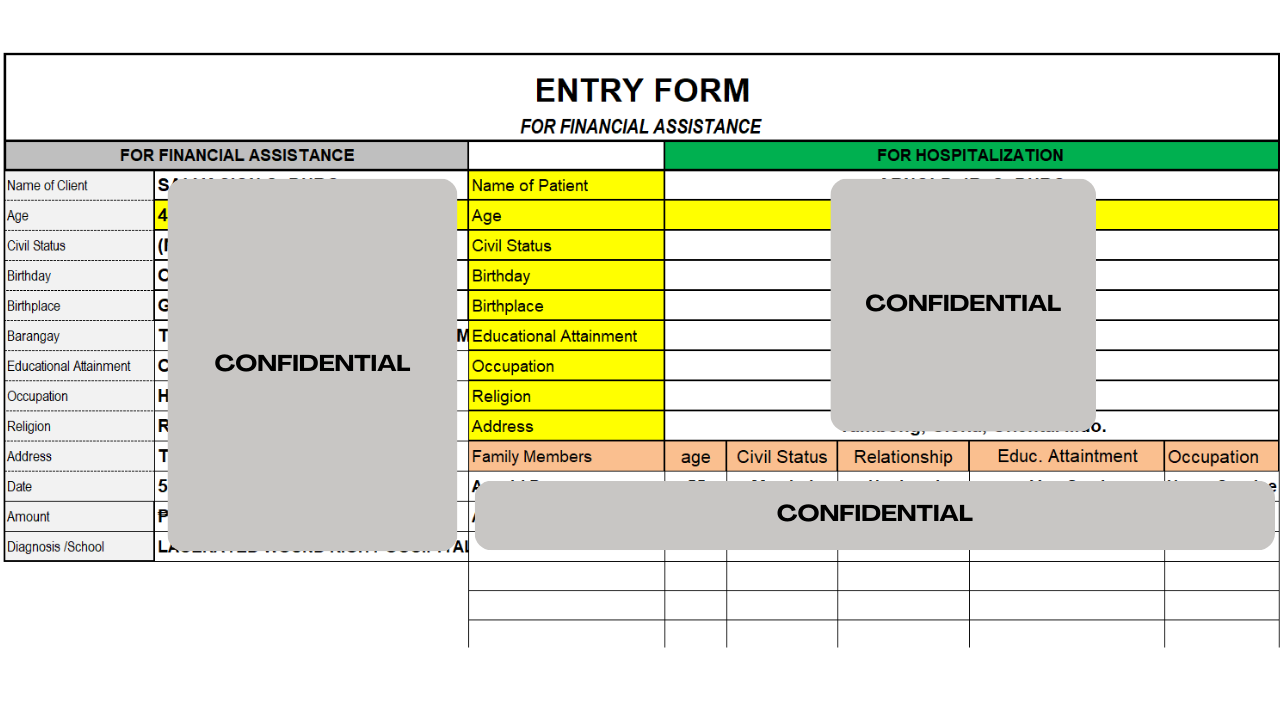
The initial phase of the AICS financial assistance workflow. Upon receipt of verified documents from the Social Welfare Aide, data is digitized to initiate the financial aid process. I am responsible for the primary conversion of physical case studies and intake forms into the General Records. This step is critical for tracking the "Crisis Flow" and ensuring every beneficiary is accounted for.
The Encoding Workflow
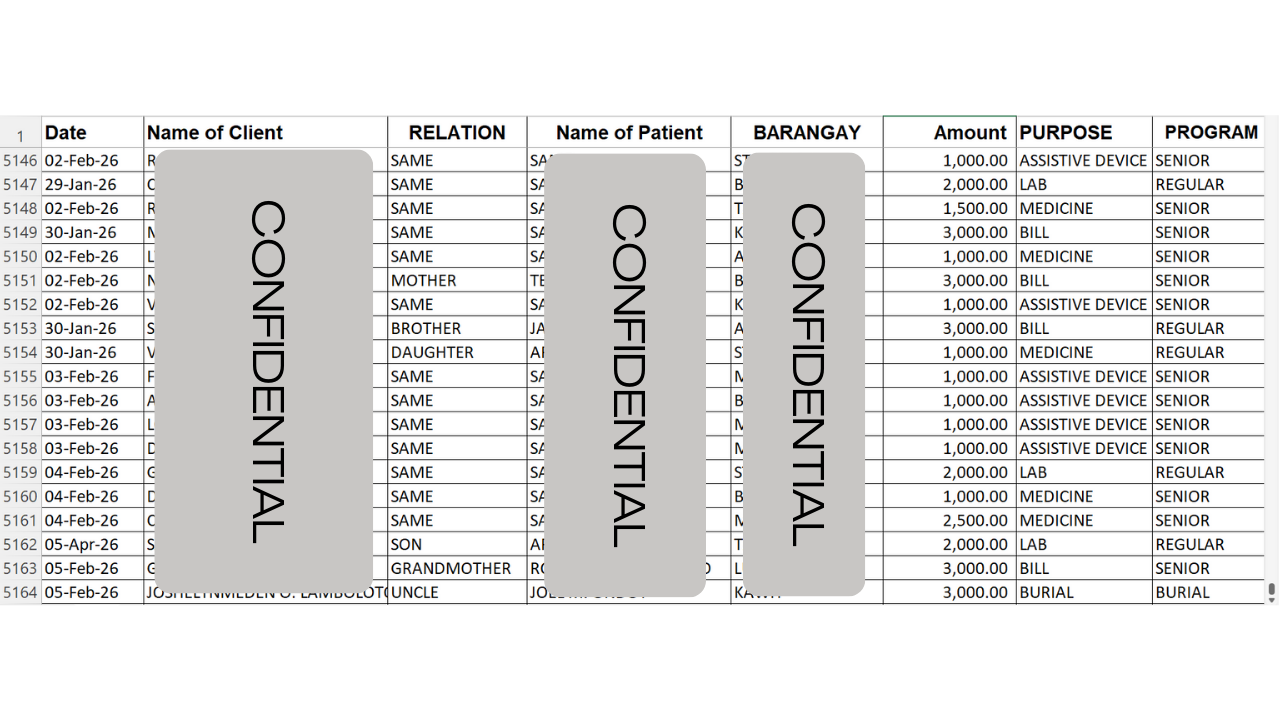
Temporal Tracking: Encoding the exact date of contact to monitor service delivery speed.
Entity Relationship: Capturing both Client and Patient names and their legal relationship to ensure claim validity.
Geographic Mapping: Logging the Barangay for localized poverty incidence reporting.
Financial Allocation: Recording the specific amount and purpose (Medicine, Lab, Hospital Bill) for budget transparency.
Program Categorization: Assigning the entry to its specific pillar: (Basic Welfare: General crisis intervention, Elderly (OSCA): Targeted assistance for senior citizens, Burial Assistance: Specific funding for funeral and post-mortem services)
Below is a representation of the data structure I maintain:
Comprehensive Patient Profiling & Master list Management
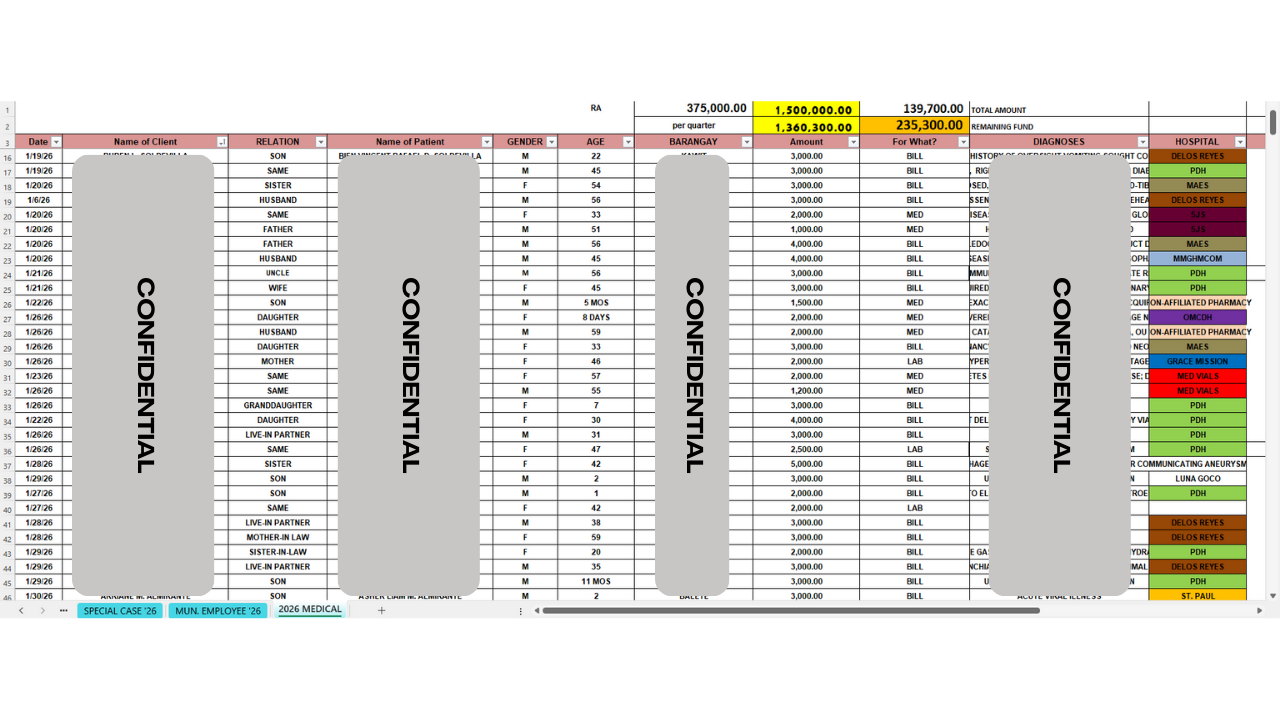
After the initial intake, the data is migrated into the Master list of Regular Clients. This is the primary database for tracking long-term assistance patterns and patient demographics. My role in this phase is to ensure data continuity while adding granular details. This Master list serves as a secondary layer of verification, preventing the duplication of claims and providing the office with a clear picture of the community's health needs (e.g., common diagnoses or frequently used hospitals).
Enhanced Data Points Captured
Demographic Segmentation: Encoding the Gender and Age of the patient to assist in the annual demographic reports.
Clinical Accuracy: Carefully transcribing the Diagnosis from medical abstracts to ensure the assistance type aligns with the patient's actual condition.
Facility Tracking: Recording the specific Hospital to monitor where the majority of the municipality's healthcare funds are being utilized.
Status Monitoring: Utilizing the Remarks section to track the status of requirements or special instructions from the Social Worker.
Master list entry:
Digital Intake & Automated Document Generation (GIS)
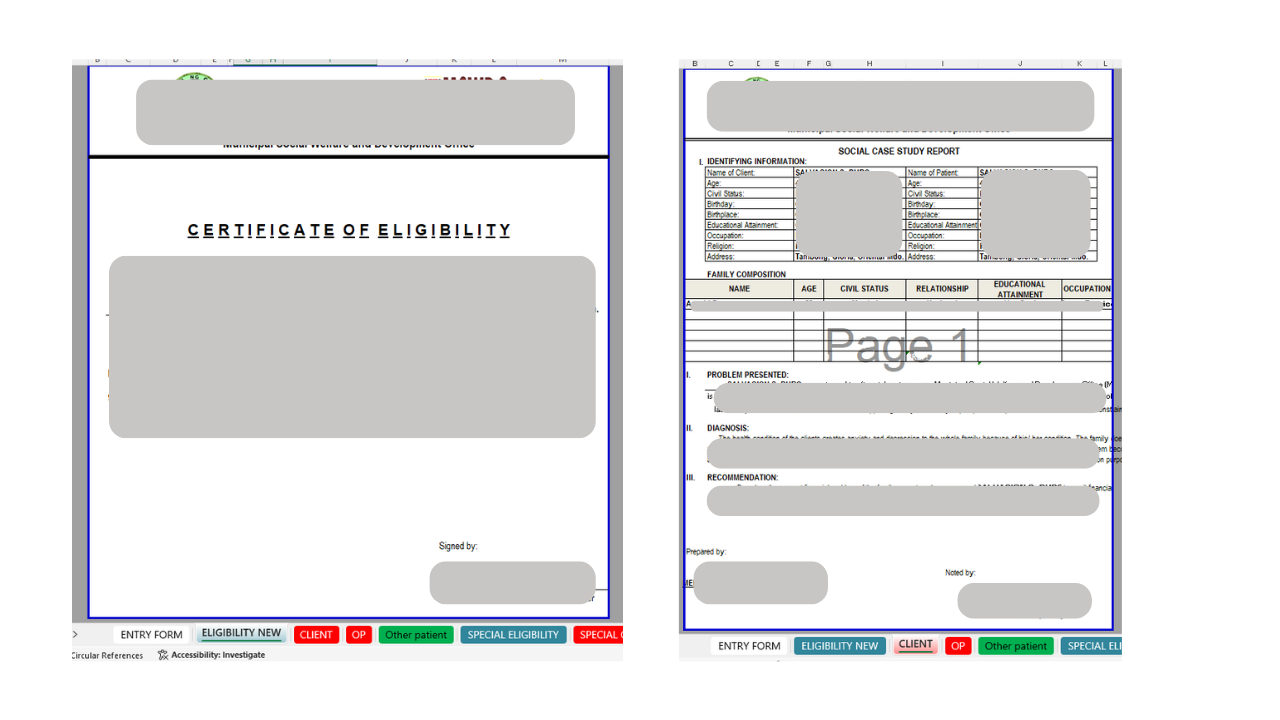
Using the General Intake Sheet (GIS), I encode comprehensive socio-demographic data. This sheet acts as a "Data Engine"—once the information is entered here, it automatically generates the Certificate of Eligibility and the Social Case Study Report through linked cell references. My role is to ensure that every field in the digital entry form is perfectly aligned with the client's physical documents. This eliminates the need for manual re-typing in later stages, significantly reducing clerical errors and processing time.
Key Data Managed in this Phase:
Bilateral Profiling: Simultaneously encoding details for both the Client and the Patient.
Socio-Economic Indicators: Capturing Educational Attainment, Occupation, and Religion to build a complete social profile.
Family Composition: Encoding the "Family Members" table, including age, relationship, and occupation, which is vital for the Social Case Study Report.
Clinical/Educational Details: Recording the specific Diagnosis or School details to justify the financial assistance.
General Intake Sheet to automated Certificate of Eligibility and Social Case Study Report:
Financial Obligation & Transmittal
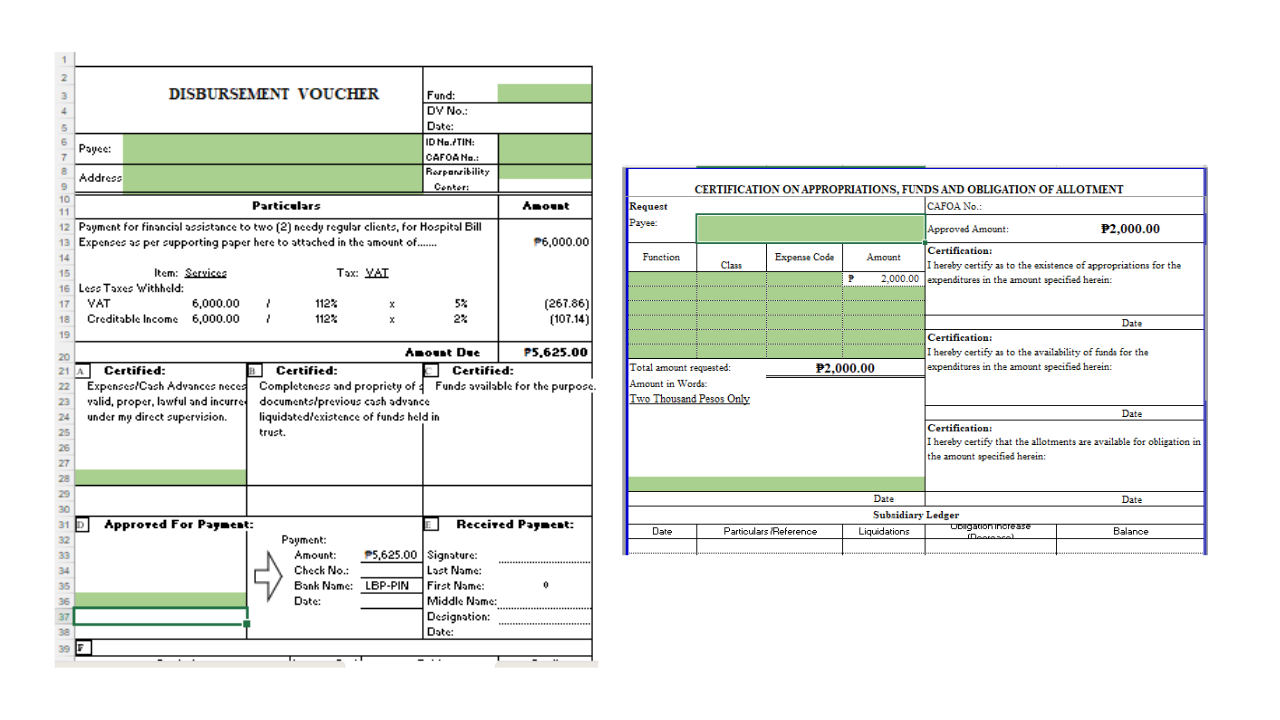
Once the intake and eligibility documents are ready, I move to the financial side of the process to ensure the funds are actually released and documented for audit. In this stage, I translate the social worker's approved assistance into formal accounting documents. Accuracy here is non-negotiable, as any error in the DV or CAFOA will cause the accounting department to reject the claim, delaying help for the client.
Key Financial Documents Managed:
CAFOA (Obligation Request): I encode the specific budget line item to certify that funds are available and "earmarked" for this specific client.
Disbursement Voucher (DV): I prepare the payment document, ensuring the amount in words and figures matches perfectly with the GIS and the approved Certificate of Eligibility.
Transmittal Letter: I generate a summary list of all processed claims being moved from the originating office to the Accounting or Treasury Office. This serves as our "Proof of Delivery."
DV, CAFOA and Transmittal Letter:
Master list of Released Vouchers (Consolidated & Individual)
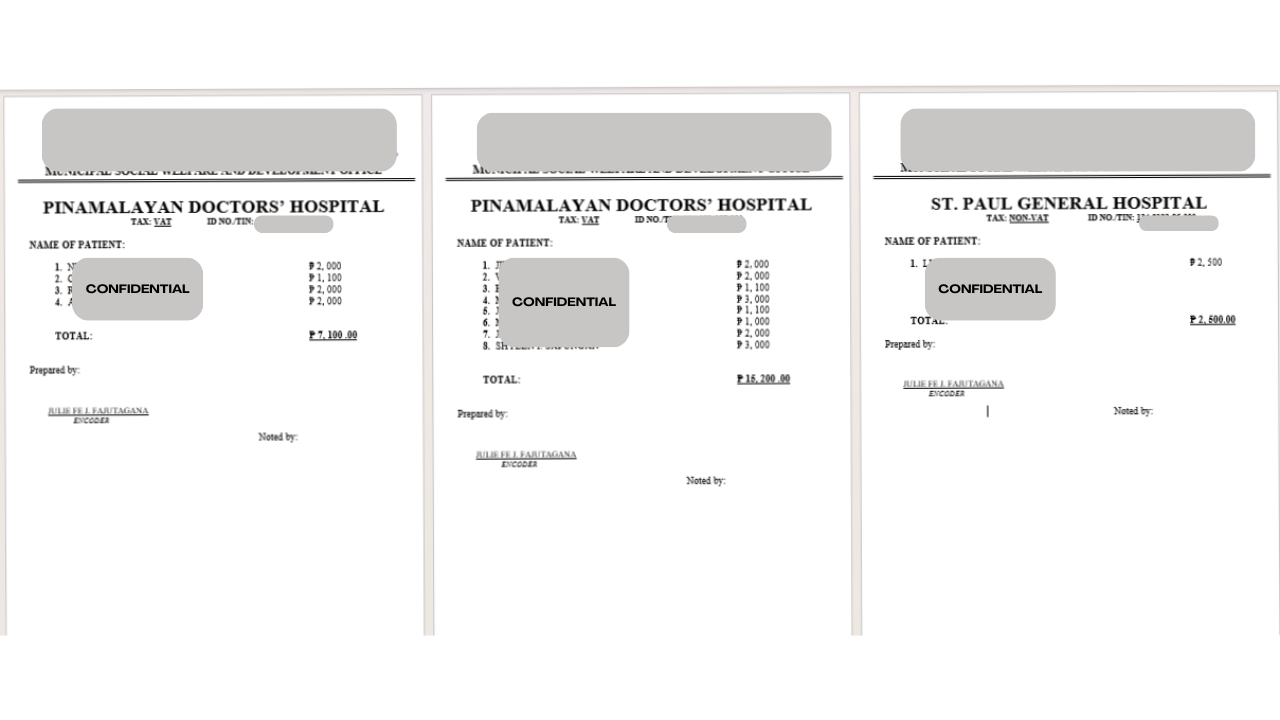
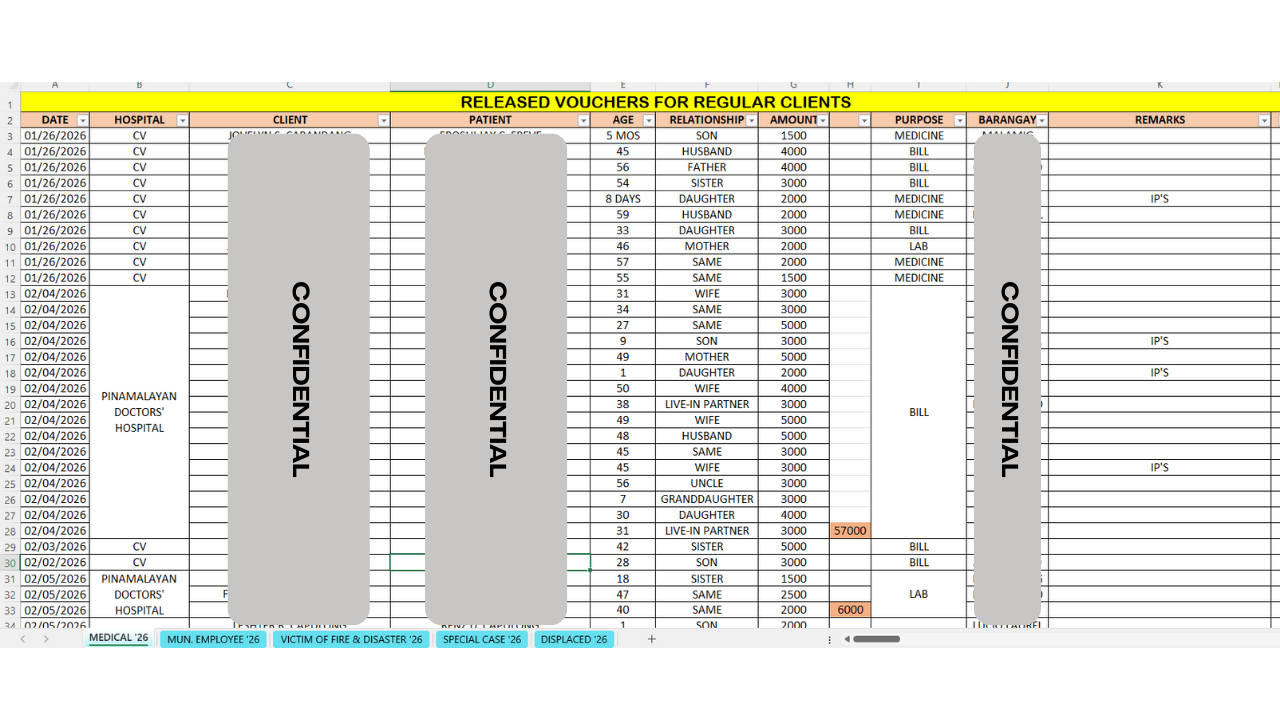
The final step involves encoding the details of released Disbursement Vouchers (DV). This is specifically for tracking payments issued to hospitals or laboratory providers that cover multiple beneficiaries in a single transaction. When the department releases a "Consolidated Voucher," I am responsible for breaking down that single total amount into the specific clients it covers. This ensures that even if one check is sent to a hospital, every individual patient’s record is updated as "Paid."
Key Data Points Managed:
Payee Identification: Recording if the DV is named after the Hospital/Supplier (Consolidated) or the Individual Client.
Release Timing: Encoding the exact date the DV was transmitted/released to ensure the department meets its liquidation deadlines.
Volume Tracking: Monitoring "How many clients" are included in one consolidated voucher to maintain an accurate headcount of beneficiaries served.
Financial Reconciliation: Matching the total DV amount against the sum of the individual amounts assigned to each patient.
Below is a representation of the data structure I maintain:
View other sample works HERE