Bookkeeping Support Using QuickBooks Online (QBO)
To showcase my hands-on
bookkeeping skills, I completed a comprehensive practice project using
QuickBooks Online’s sample company file. This exercise simulated real
bookkeeping tasks a small business would need — from cleaning up bank
transactions to producing financial reports — giving me the opportunity to
apply my knowledge in a practical, end-to-end workflow.
Bank Transaction Categorization
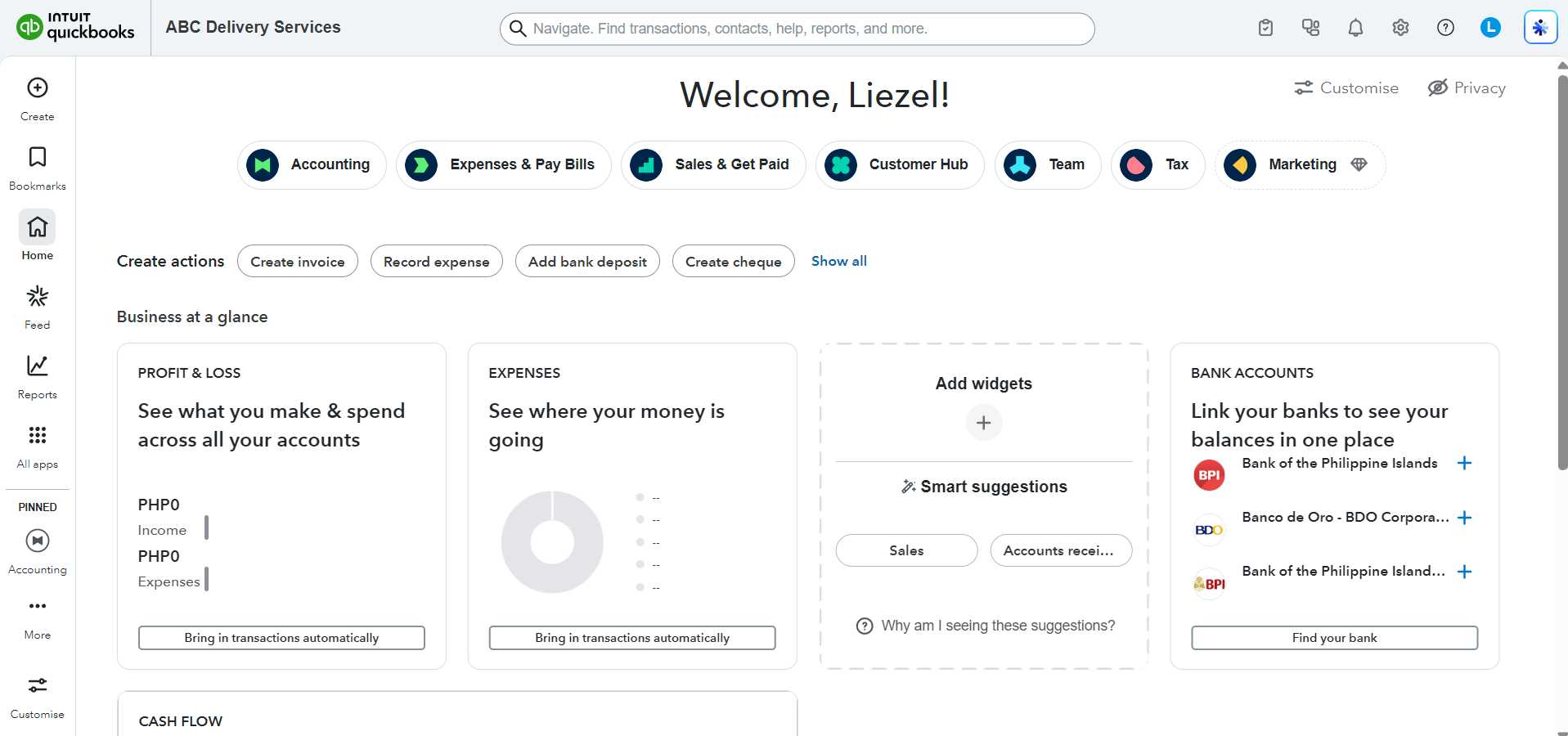
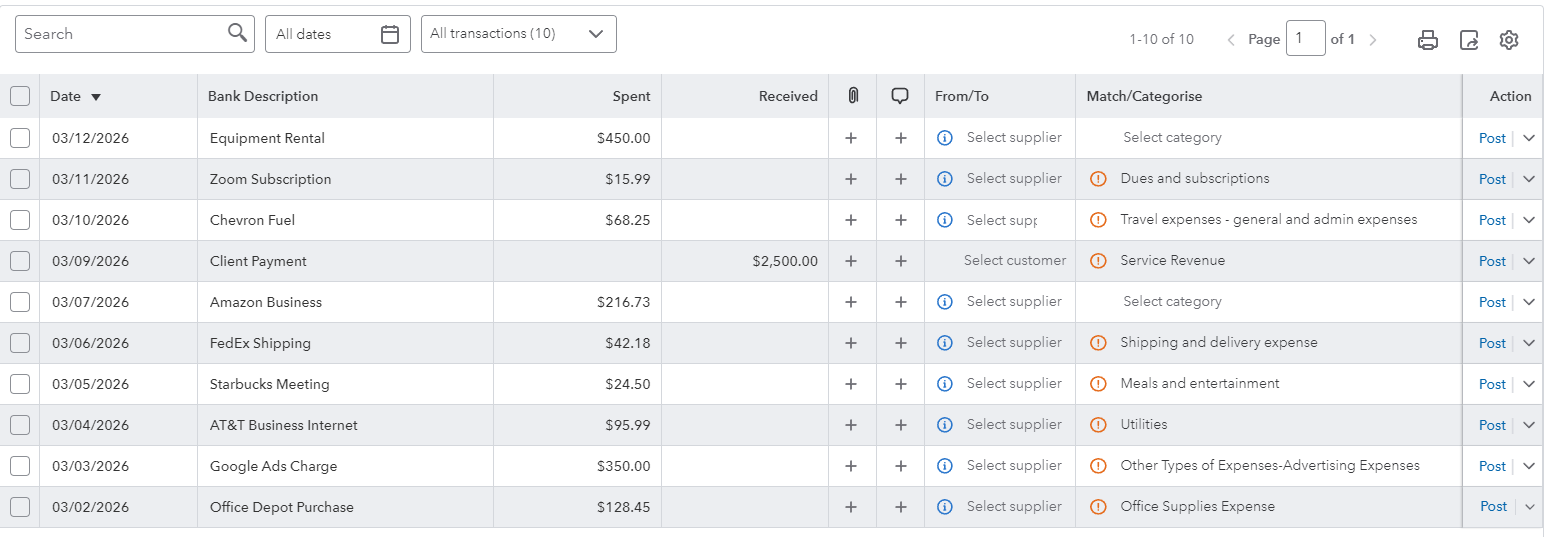
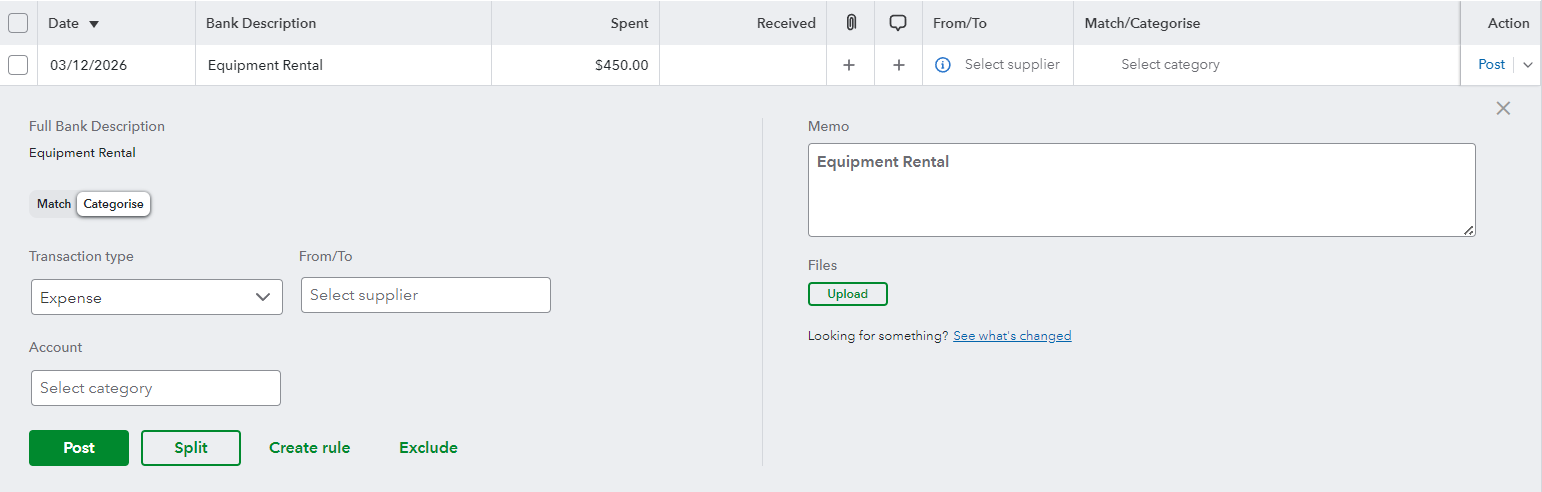



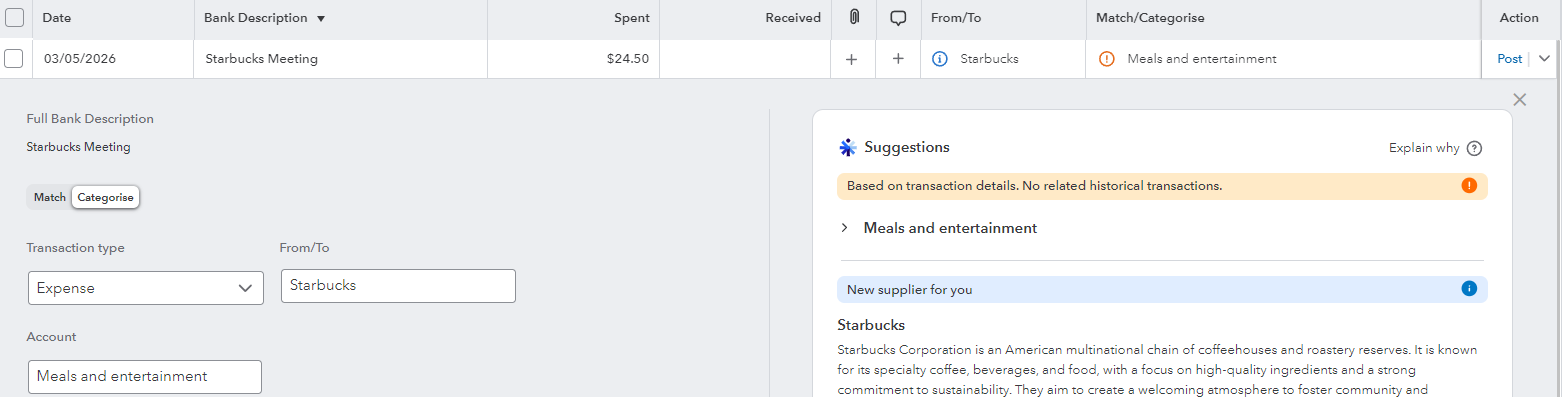

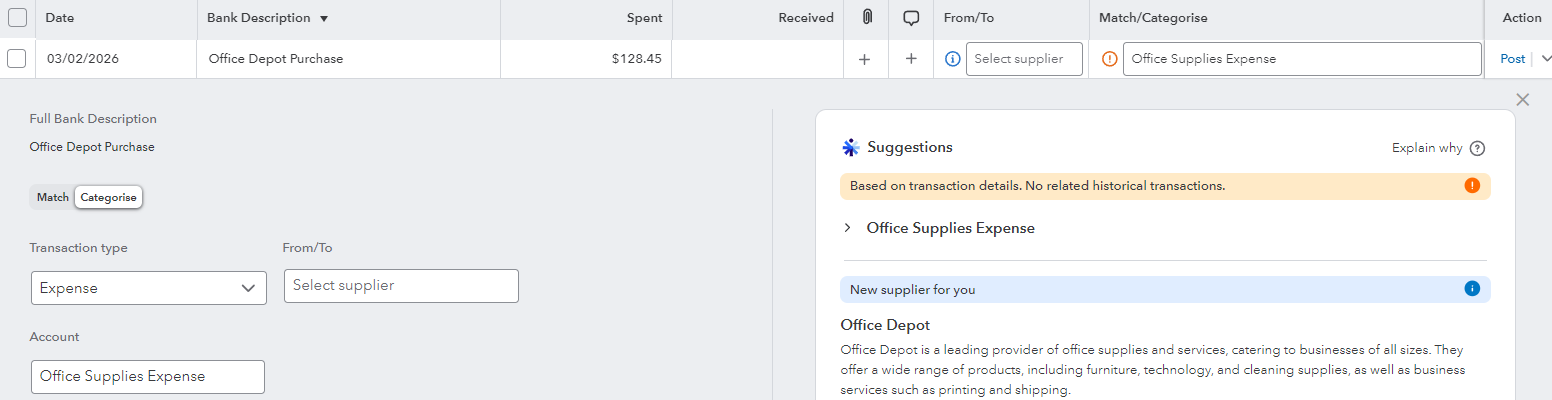

Reviewed imported bank transactions in QuickBooks Online and verified the corresponding vendors/customers for each entry. Assigned appropriate income and expense categories, added memos, and posted the transactions to complete the review process. Screenshots were captured before and after categorization as documentation.
Bank Reconciliation
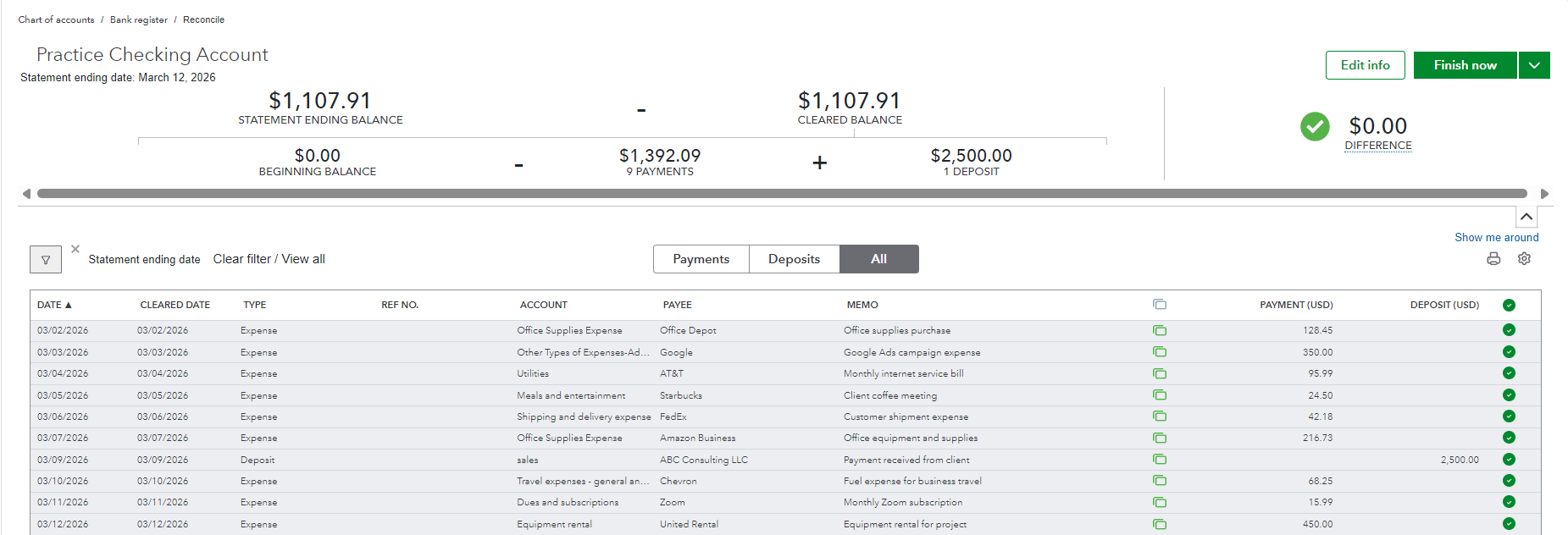
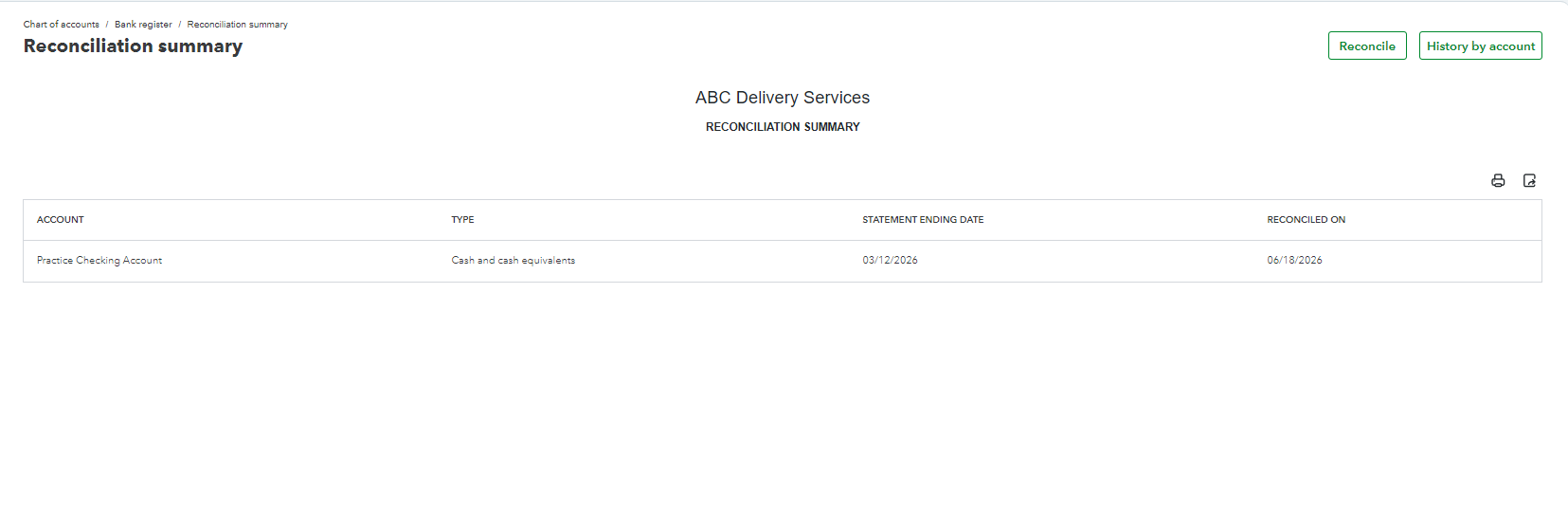 Reconciled the Practice Checking Account by matching cleared transactions to the statement balance, achieving a $0.00 difference. Reviewed the Reconciliation Summary to confirm account accuracy.
Invoice Creation
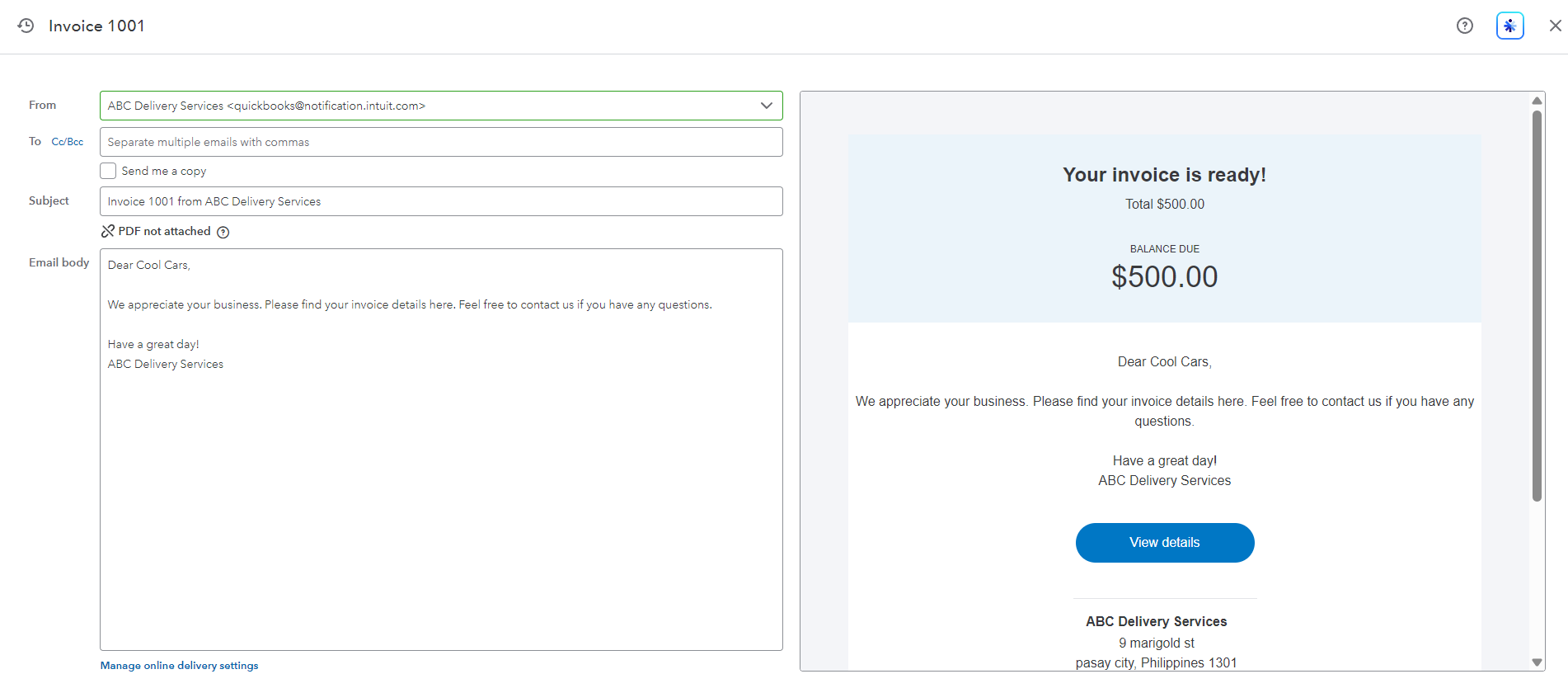
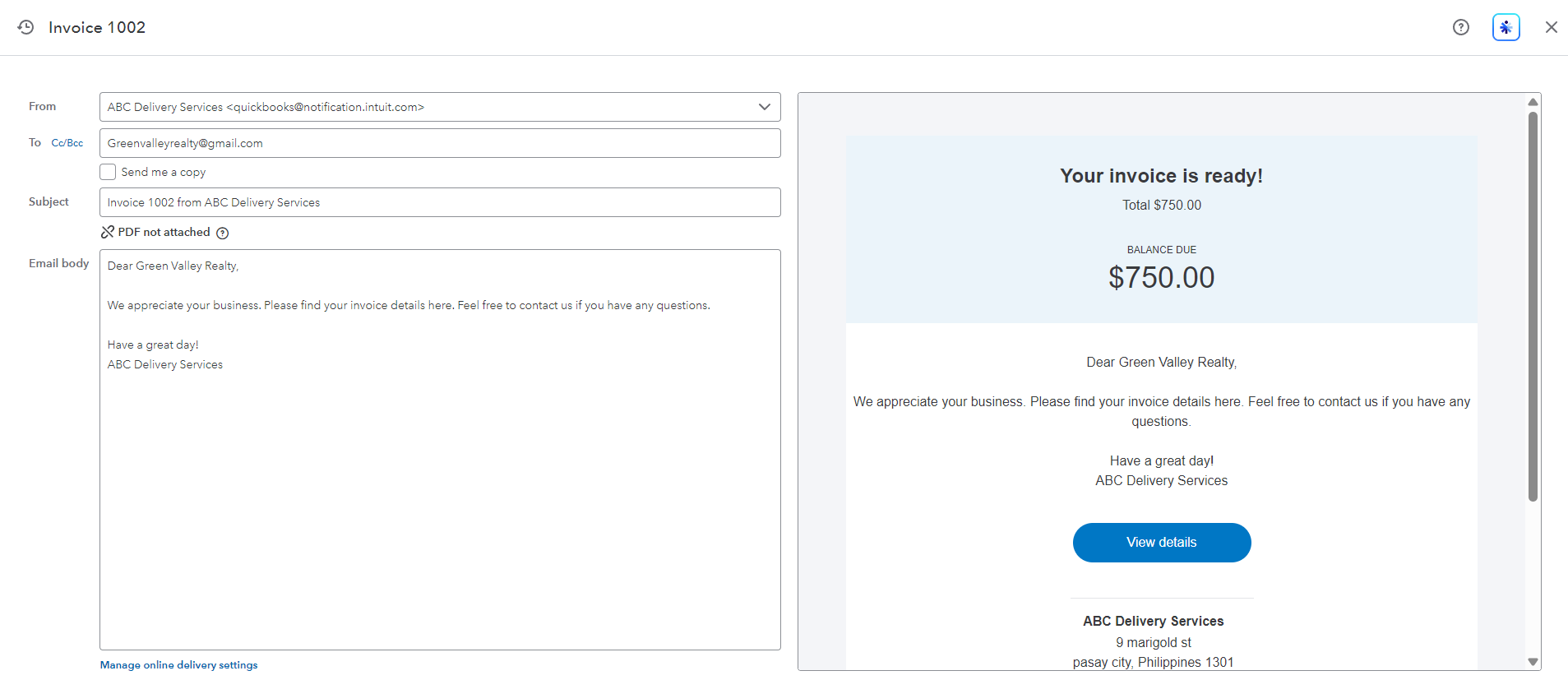
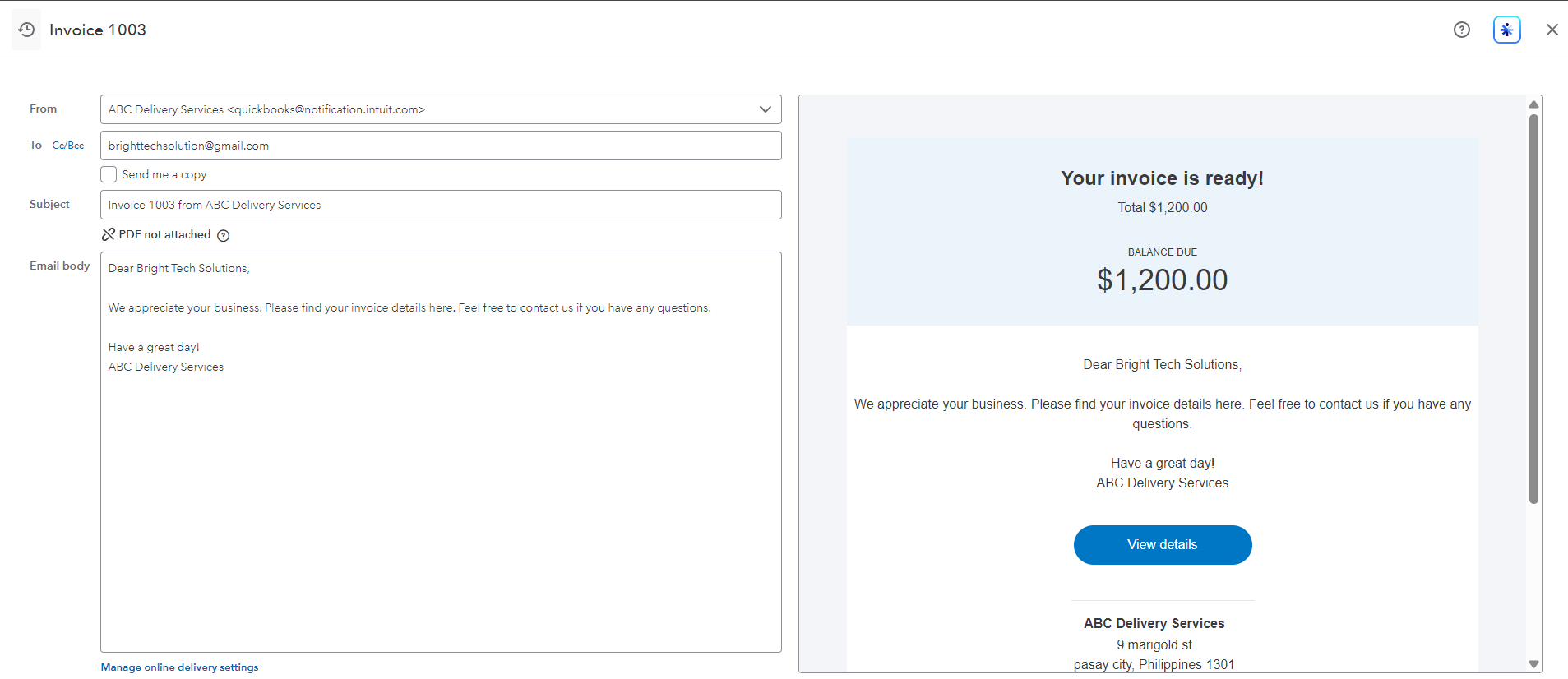
Created and managed customer invoices, entering customer details, invoice and due dates, products/services, and billing amounts. Generated invoices for multiple clients and prepared them for delivery.
Vendor Bill Recording
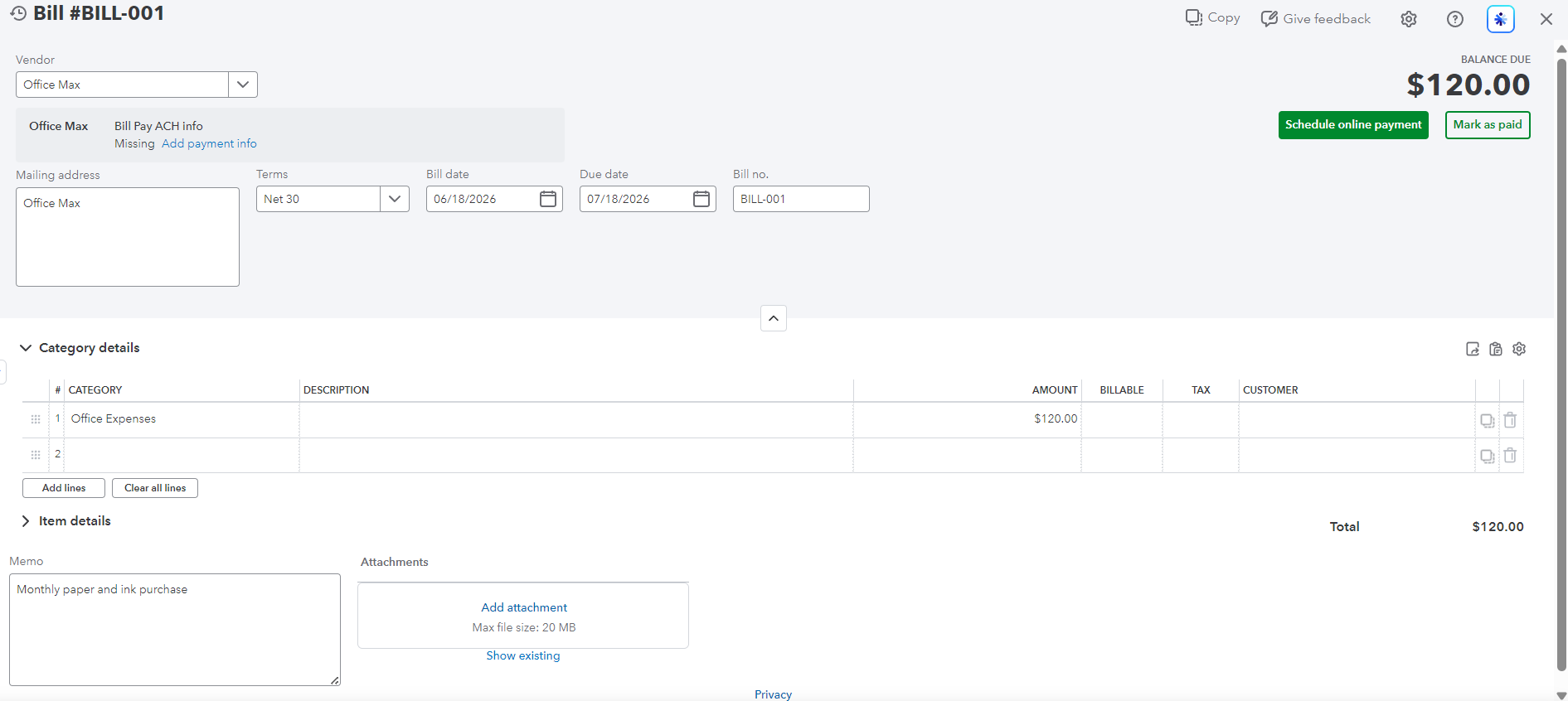
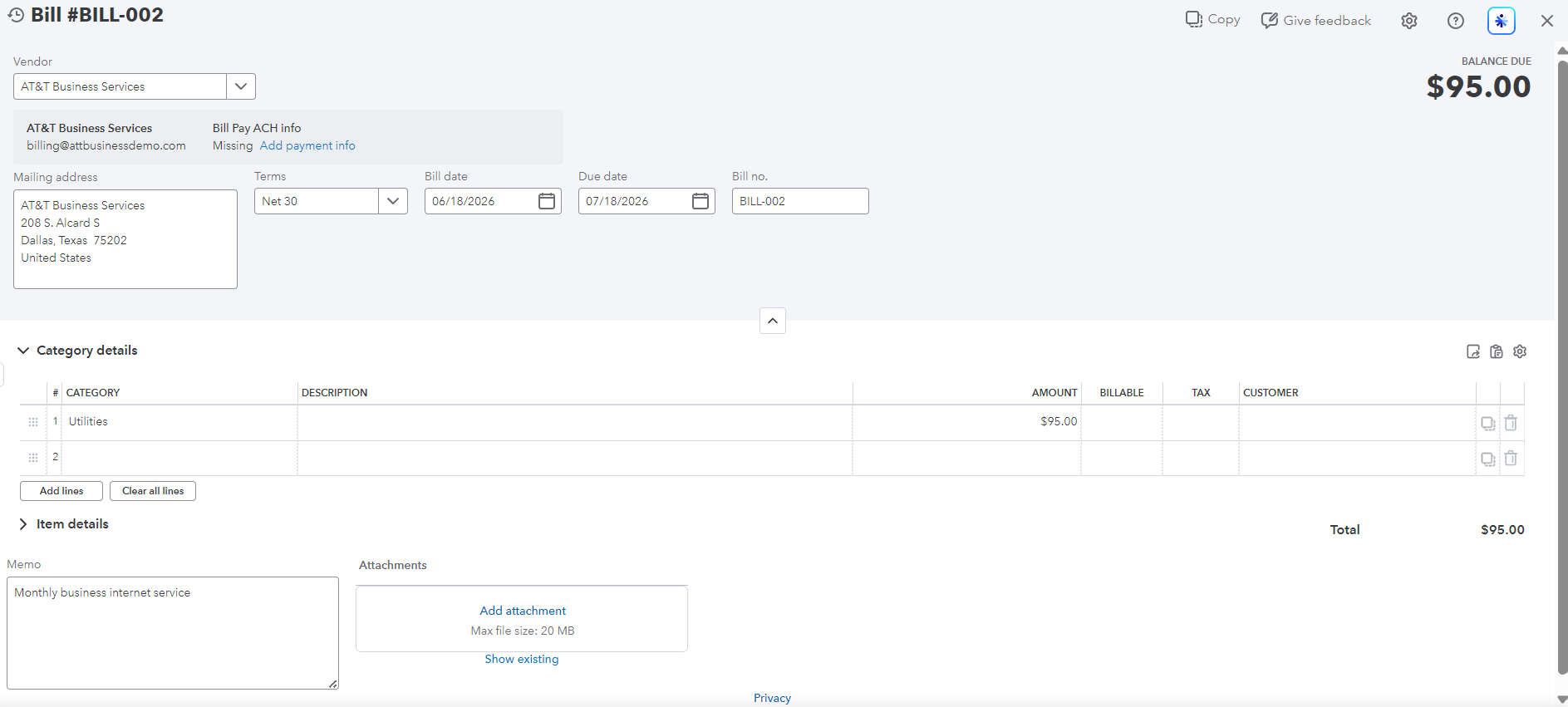
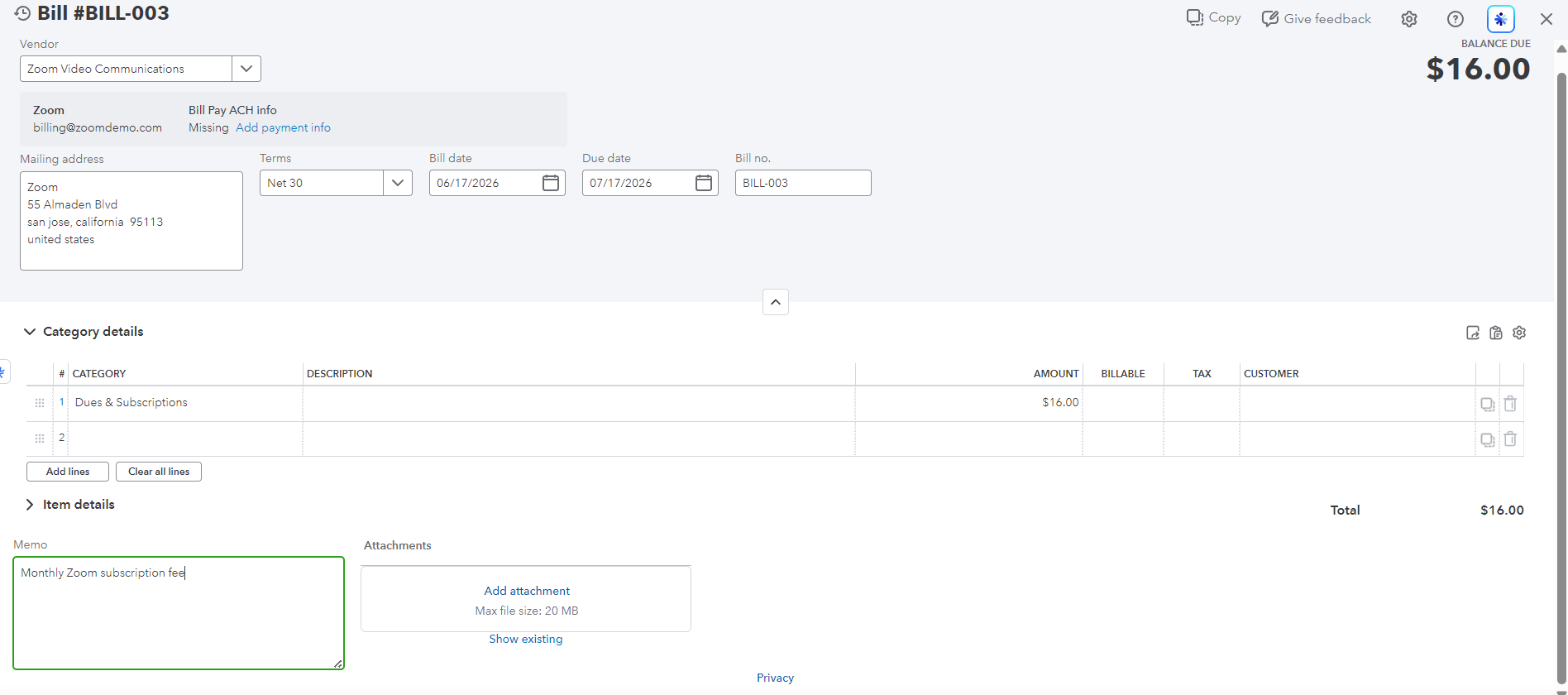
Recorded vendor bills by setting up supplier records, entering bill details, assigning expense categories, and adding supporting memos. Processed accounts payable transactions to maintain accurate expense tracking and vendor management.
Generate Financial Report
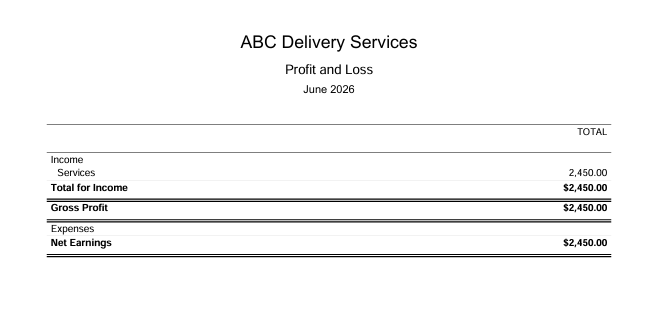
Profit and Loss
Balance Sheet
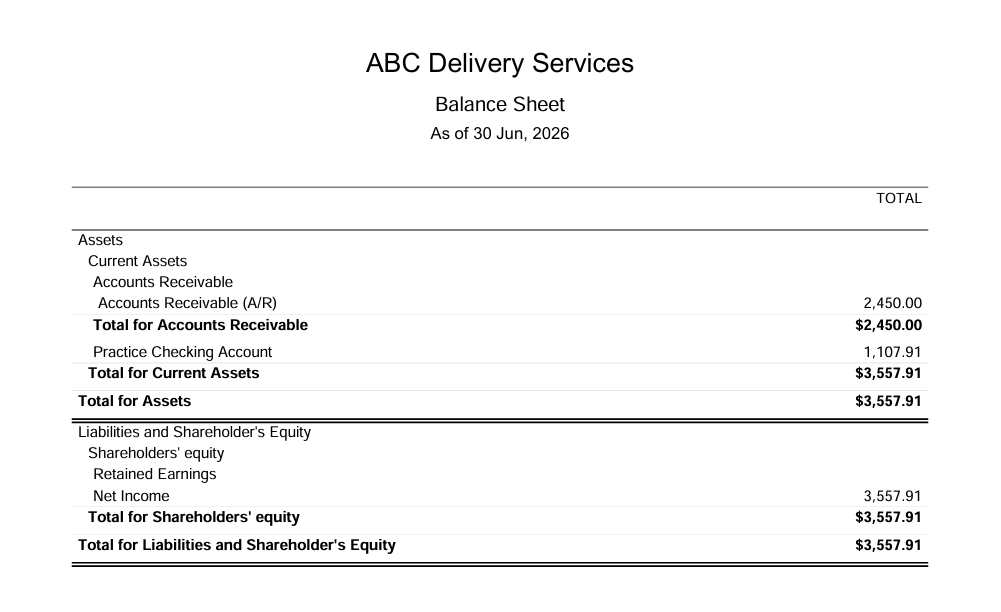
Total assets were $3,557.91, made up mainly of Accounts Receivable ($2,450.00) and the Practice Checking Account ($1,107.91). The company had no liabilities, with total equity at $3,557.91 — reflecting a strong financial position.
Expenses by Supplier Summary Report
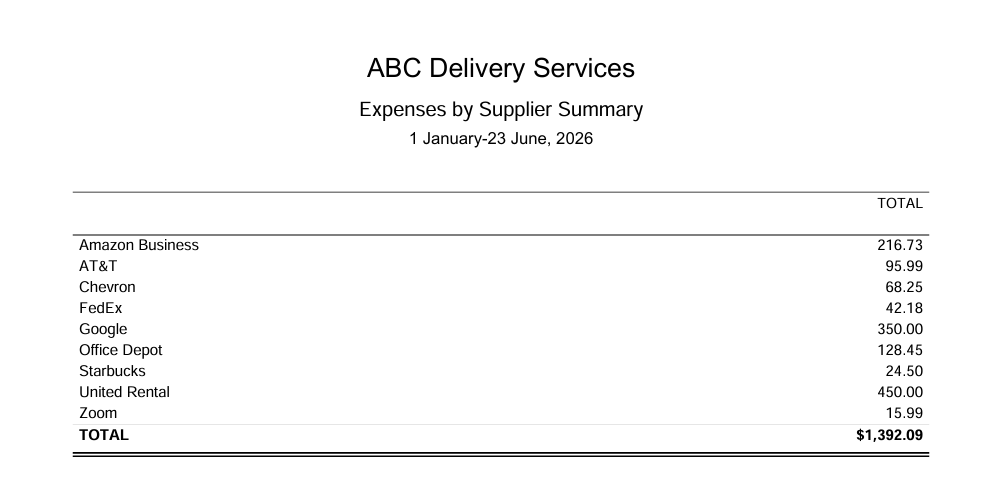 United Rental was the highest expense supplier at $450.00, followed by Google at $350.00.
Total expenses across all suppliers amounted to $1,392.09 for the reporting period.
United Rental was the highest expense supplier at $450.00, followed by Google at $350.00.
Total expenses across all suppliers amounted to $1,392.09 for the reporting period.Chart of Account
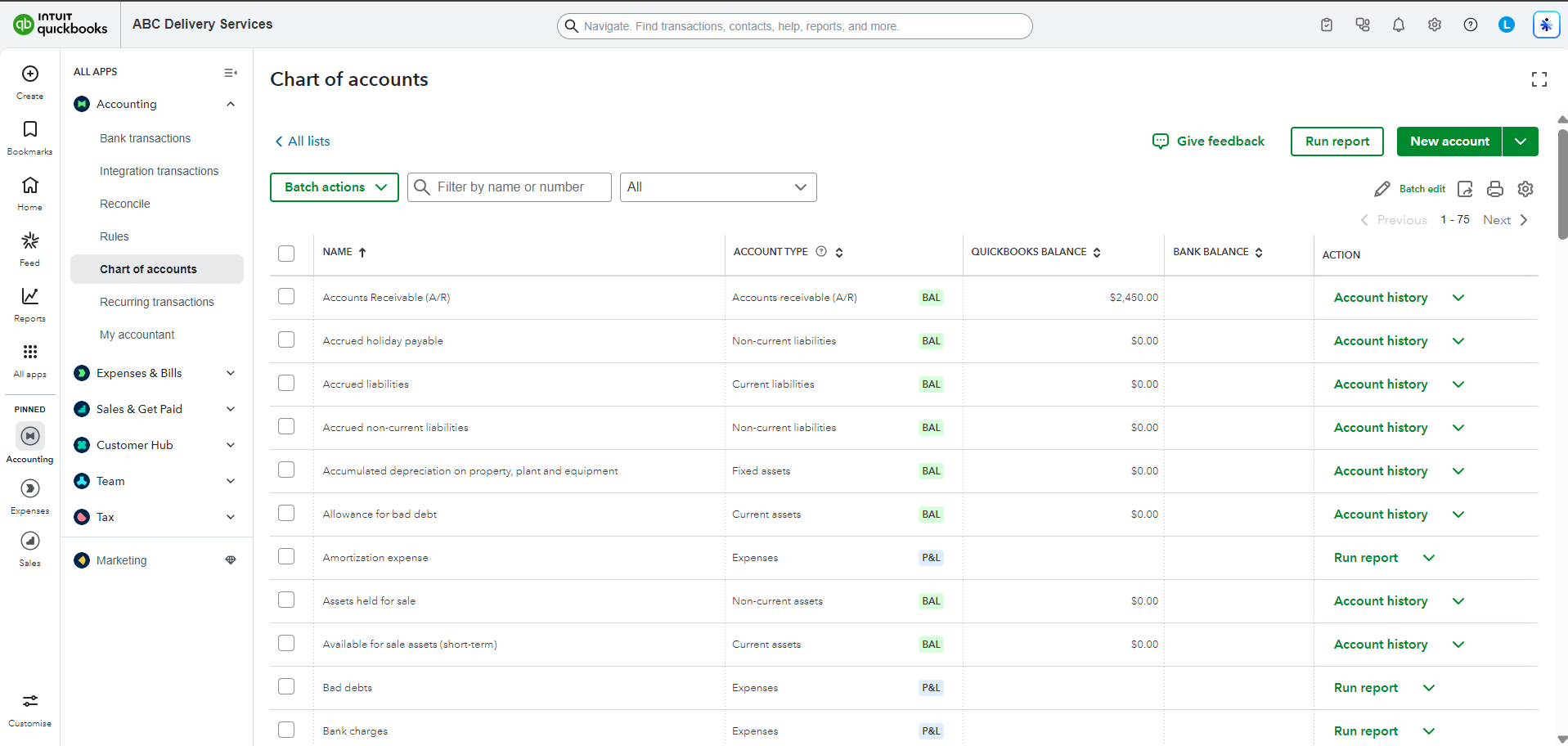
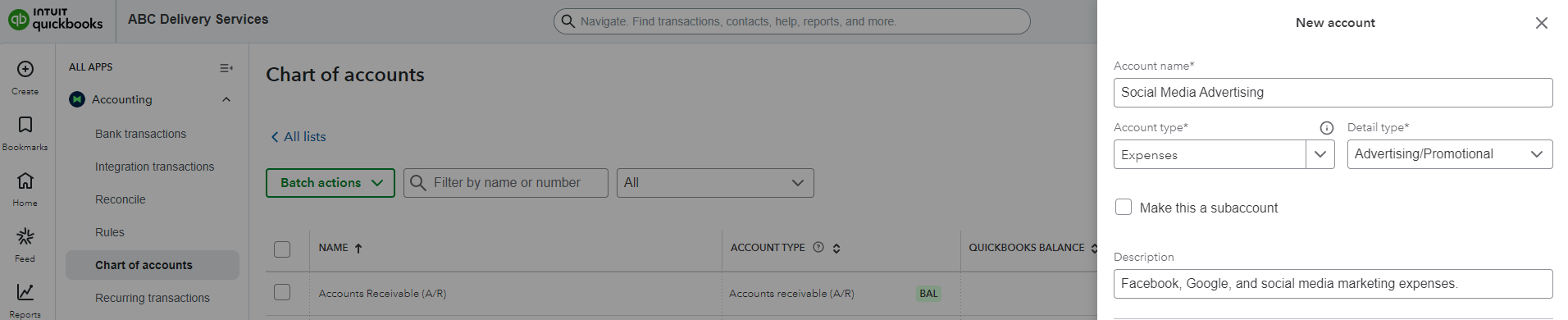
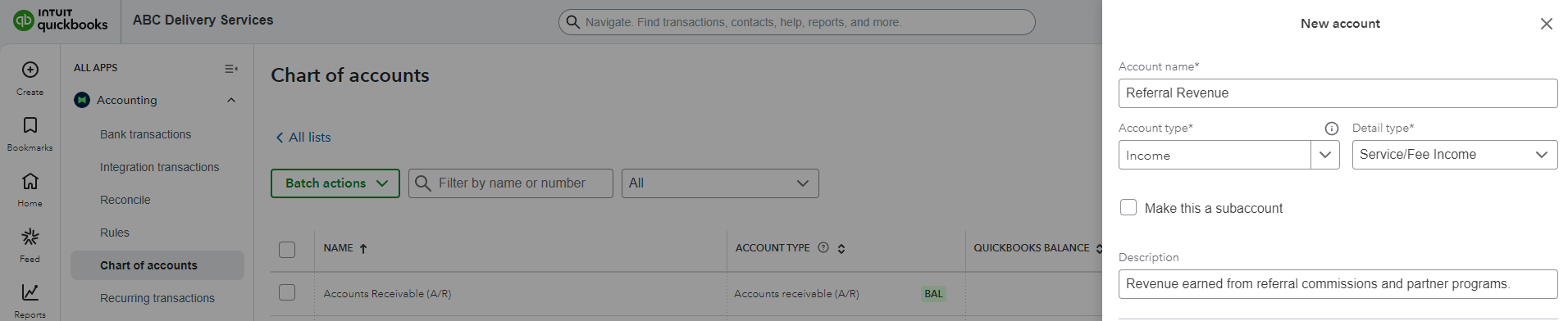
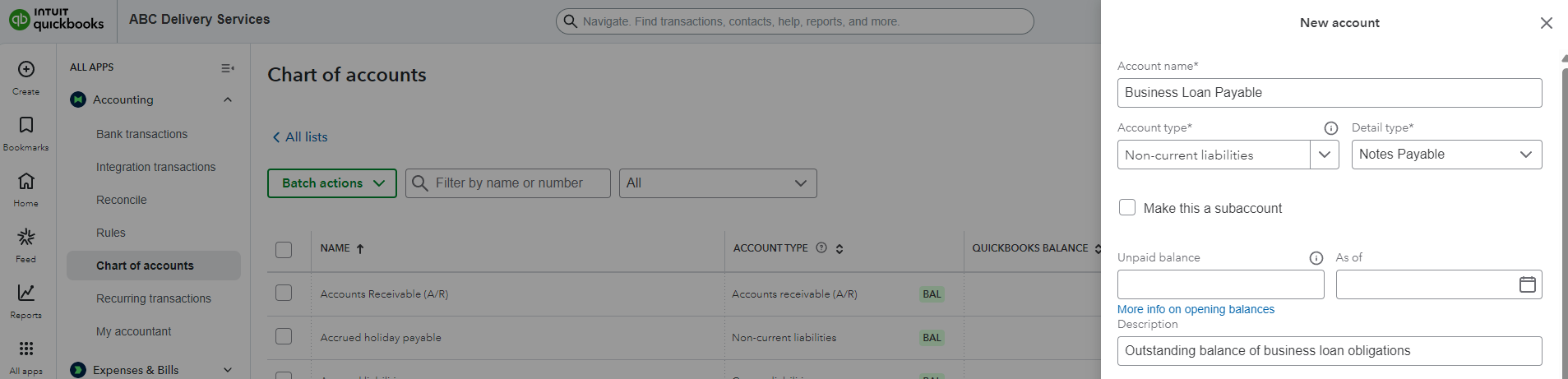
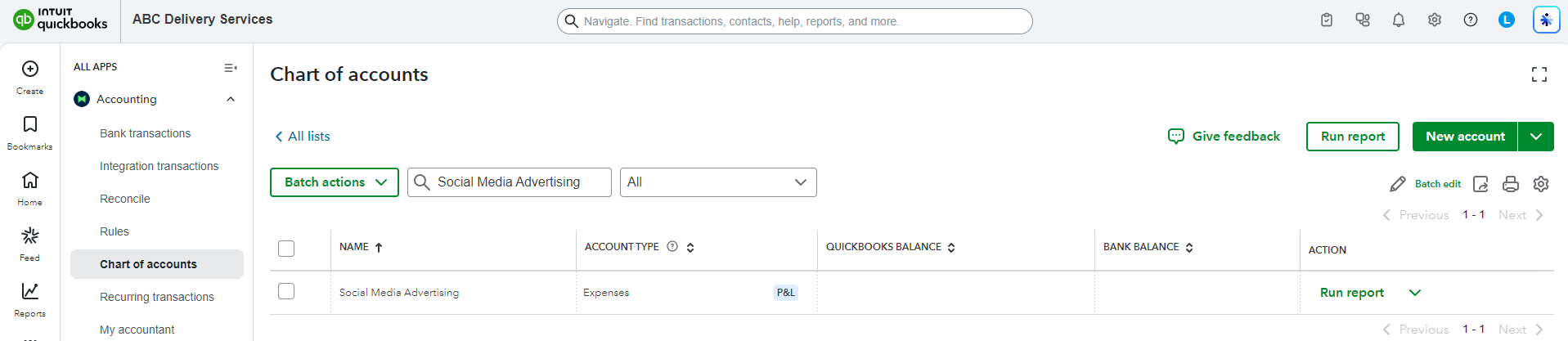
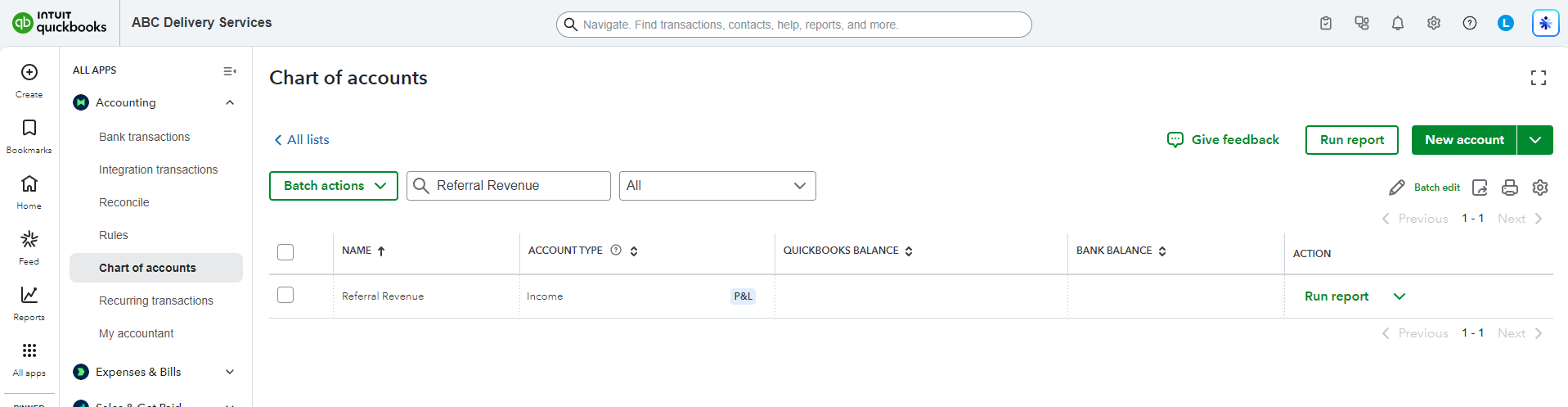
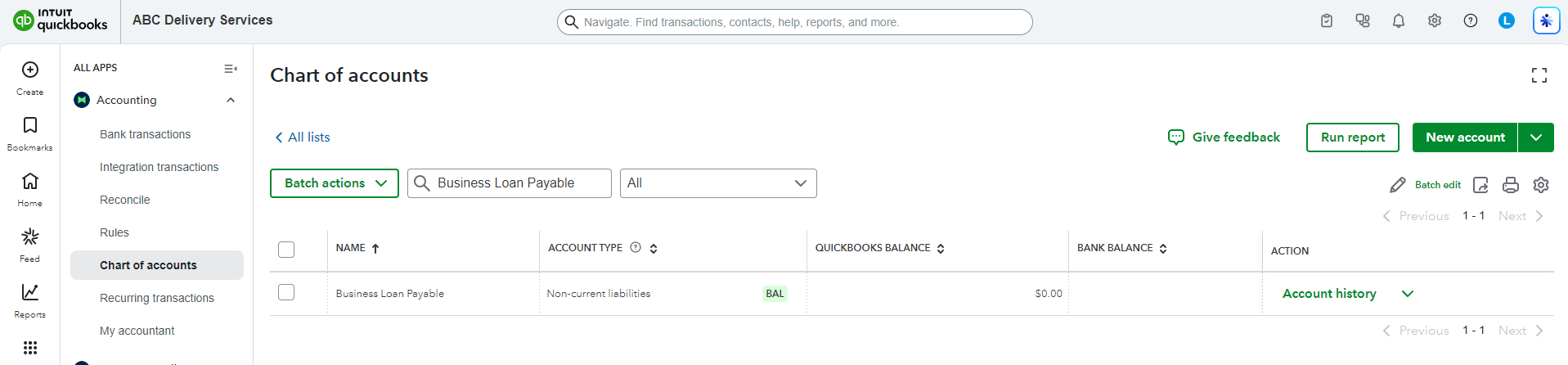
Created three new accounts in the Chart of Accounts to support accurate financial tracking and reporting: a custom expense account for social media advertising, an income account for referral revenue, and a liability account for business loan obligations. This ensured transactions could be properly categorized and reported going forward.